Chandan
172: four rules, five days
Hey, it’s Marc & the 51 team. I don't think Washington has ever shipped this much crypto policy in a single week. Each one would normally be the headline. * The US Labor Department proposed allowing Bitcoin in 401(k) plans, opening digital assets to $7.7 trillion in American retirement savings. * US Congress advanced a payment stablecoin framework, pushing dollar-backed digital currencies closer to formal regulatory recognition. * The Treasury published its first rule under the GENIUS Act.
171: NYSE and Nasdaq pick sides
Hey, it’s Marc & the 51 team. Tuning in from DAS New York this week (which was much more institutional than last year). A few things that caught my eye: * A bipartisan Senate deal on stablecoin yields finally broke months of gridlock on the Clarity Act (banks won). * Both NYSE and Nasdaq announced tokenization partners this week, but they have very different ideas about what comes next. Our other highlights this week: * Franklin Templeton puts five ETFs on the blockchain * Coinbase and B
Mastercard, PayPal, Stripe
Hey, it’s Marc & the 51 team. The SEC did something this week that people will look back on. * They issued a 68-page joint interpretation on token classifications together with the CFTC, for the first time in 183 years of combined existence. * Chairman Atkins proposed a principles-based framework, replacing stock-market checklists with broad standards like disclosure and investor protection. * Director Moloney declared the end of the Howey Test for crypto, the 80-year-old standard used to c
169: NYSE, OKX, Kraken, ECB, Revolut
Hey, it’s Marc & the 51 team. NYSE picked OKX. Nasdaq picked Kraken. America's two largest stock exchanges are now both building tokenized equities through crypto-native settlement partners, and neither picked a bank. Also this week, the SEC and CFTC signed a historic MOU to coordinate on digital asset oversight, with Chairman Atkins pushing for a unified framework including joint product reviews. Here are our highlights this week: * Nasdaq to build tokenized equities with Kraken * ECB lau
4.5% broke Congress
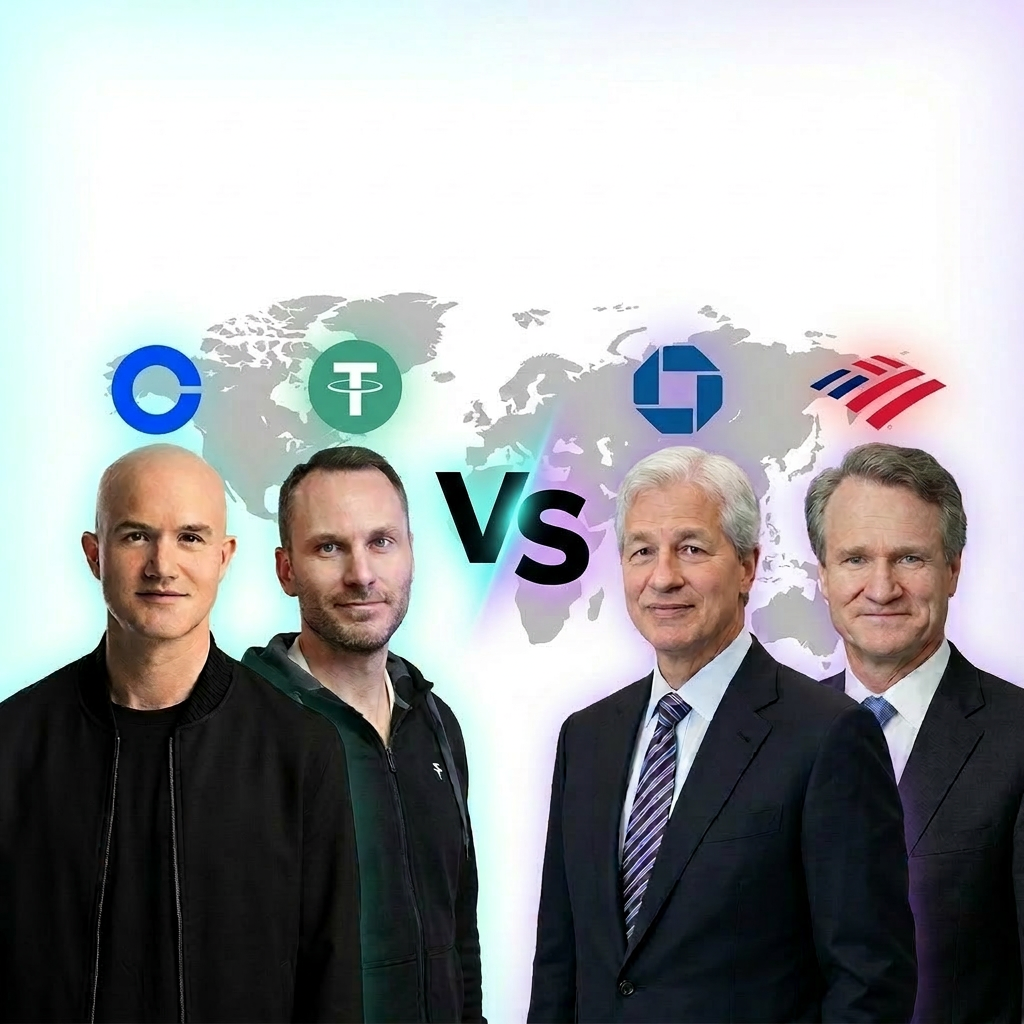
Hey, it’s Marc, The CLARITY Act missed its March 1 deadline because banks and crypto can't agree on one number: 4.5%. That's the yield Coinbase pays on USDC. Your bank pays 0.01%. A Treasury study says $6.6 trillion in deposits are at risk. The most important crypto bill in U.S. history is stuck, with four months before the midterms freeze everything. [RELEASE] Let’s unpack. 👉PRO: Download the PDF below Subscribe now What happened The CLARITY Act passed the House in July 2025 with bipa
BNP Paribas called it an 'experiment'
Hey, it’s Marc, Name one major institution that launched tokenized funds on a private blockchain and stayed there. You can’t. BlackRock moved to Ethereum. Franklin Templeton moved to Ethereum. JPMorgan moved to Ethereum. Last week, BNP Paribas joined them as the first and largest European bank. And they went further. [RELEASE] Let’s unpack. 👉PRO: Download the PDF at the bottom Download Subscribe now What happened On February 19, 2026, BNP Paribas Asset Management issued a tokenized sha
168: NYSE, OKX, Kraken
Hey, it’s Marc & the 51 team. The SEC submitted a proposal outlining how securities laws apply to crypto. This means: SEC won’t wait for Congress. And Washington is betting on private stablecoins and regulated crypto. [SEC] More on that below. Here are our highlights this week: * ICE (NYSE’s parent) invested in OKX at a $25 billion valuation, with plans to let OKX users trade tokenized NYSE-listed stocks on-chain by H2 2026. [RELEASE] * We sat down with the man responsible for this.
Fidelity goes on-chain
Fidelity doesn't do crypto. It manages $6.8 trillion. So when the 79-year-old asset manager launched its own stablecoin on January 28, the game fundamentally changed. On January 28, 2026, the second-largest asset manager in America launched FIDD, a dollar-pegged stablecoin that Fidelity issues, distributes, and custodies in-house. [PRESS RELEASE]. For the first time, a titan with a national trust bank charter, the highest tier of federal oversight, is offering 24/7 dollar settlement on Ethereu
USDC prints $2.7B. Coinbase keeps 60%
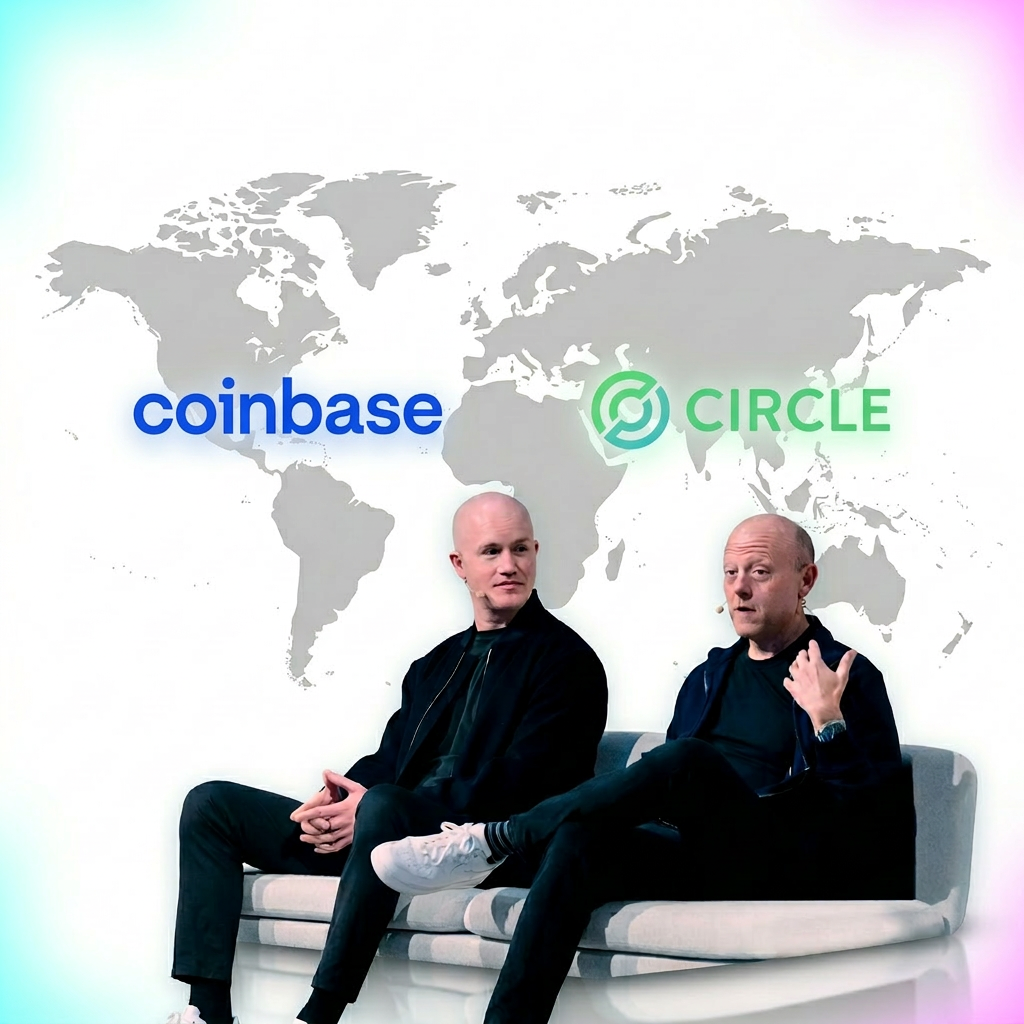
Circle (NYSE: CRCL) reported Q4 2025 results that beat estimates across the board. It's one thing to build a $75B stablecoin network. But it's another to keep the economics. Circle Internet Group (NYSE: CRCL) is the issuer of USDC, the world's second-largest stablecoin at $75.3B. The company generated $2.75B in revenue in FY 2025, up 64% year-over-year, with Q4 net income of $133M and its stock surging 30% post-earnings. [RELEASE] But here's the number nobody's talking about: Circle paid $1.6

167: Stripe wants to eat PayPal alive
Hey, it’s Marc & the 51 team. Welcome back to your weekly briefing. The US stablecoin regulation is maturing. The OCC just proposed new rules to put guardrails around stablecoins (digital money tied to the U.S. dollar), following the GENIUS Act that passed last year. The rules cover everything from who can issue them to how they must be backed and managed. [RELEASE] 👉 Join the 51 live session with SEC Commissioner Hester Peirce on March 6, 3pm EST. Spots are limited! Reserve your spot Other

Apollo bought 9% of a DeFi protocol
Wall Street went from dismissing DeFi to integrating DeFi for tokenized funds to acquiring governance stakes. Morpho Association announced a cooperation agreement with Apollo Global Management affiliates. The deal: Apollo may acquire up to 90 million MORPHO tokens, over the next four years. This came just 48 hours after BlackRock listed its $2.1B BUIDL fund on Uniswap and purchased UNI governance tokens. [RELEASE] This didn't happen overnight. The shift from dismissing DeFi to governing it tel
166: Apollo bought 9% of a DeFi protocol
166: Apollo bought 9% of a DeFi protocol0:00/2001× Hey, it’s Marc & the 51 team. Welcome back to your weekly briefing. Here's where we are: * BTC is holding around $67K with the broader market steady near ~$2.3T. Polymarket odds for BTC reaching up $75K in February sit at 15%. * Institutions kept averaging into the drawdown: BitMine bought 45,759 ETH ($90M), while Strategy added 2,486 BTC ($168M). * Now, DeFi had an interesting week. Strong announcements (BlackRock x Uniswap, Apollo x Morp

BlackRock just plugged into DeFi
Hey, it’s Marc & the 51 team, For the past few years, the key question in tokenization has been whether it would be integrated into DeFi protocols. But on February 11, 2026, BlackRock answered this question. By integrating its $2.2B BUIDL fund with Uniswap (the largest DEX), BlackRock(the world’s largest asset manager) enabled institutions to swap U.S. Treasuries for USDC, 24/7, 365 days a year. [RELEASE] But this isn’t the open DeFi you’re used to. It’s a hybrid of public and private market
165: The dip is being bought
165: The dip is being bought0:00/2001× Hey, it’s Marc & the 51 team. After last week’s brutal sell-off that pushed BTC toward the low around $60k (2024 level), the market has finally staged a calm. Institutions are back in business buying the dip; * BitMine bought 40,613 ETH ($79M) while Strategy added 1,142 BTC ($90M). * Binance’s Secure Asset Fund for Users (SAFU) added about 8,770 BTC ($600M). * Goldman Sachs’ recent SEC filing showed about $2.36B in crypto exposure through ETFs, includ
164: Capital is repricing
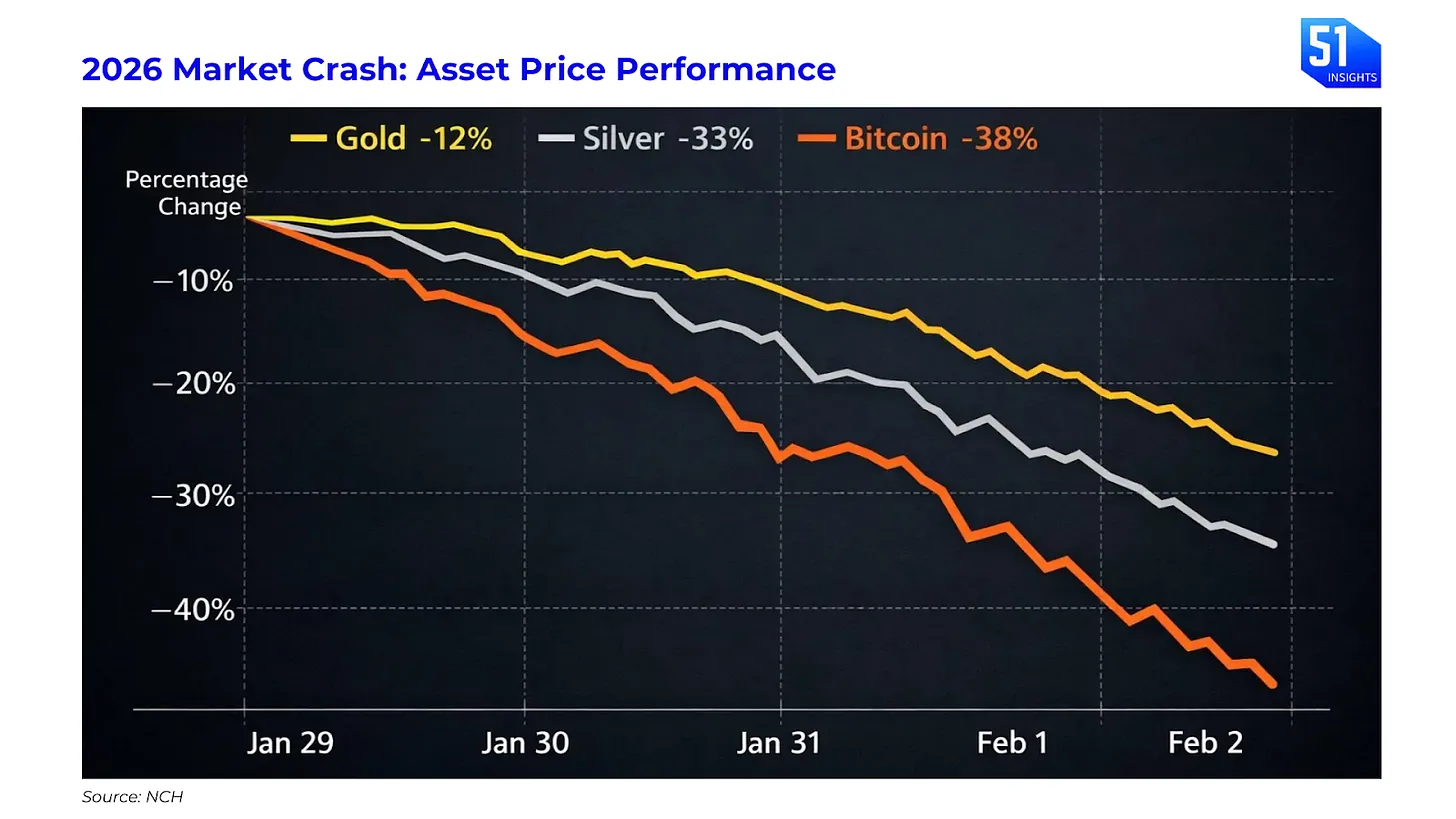
164: Capital is repricing0:00/2001× Hey, it’s Marc & the 51 team. What a week, folks – and only in crypto. We have a packed newsletter for you today to untangle everything that happened. In case you missed it: Bitcoin crashed 30% in 7 days below $60K (is not already back at $70K) amid a brutal market-wide crash that wiped over $1T in value and lead $5B+ in liquidations. Strategy and Bitmine are sitting on billions in unrealized losses, choosing not to sell and instead continuing to buy more,
163: The Canton moment
163: The Canton moment0:00/2001× Hey, it’s Marc & the 51 team. While Blackrock took a quiet $100M stake in Canton, BitGo IPO’d at $2B and Tether launched its US stablecoin USAT, the biggest shift in crypto this week came from Capitol Hill: “Advancing this bill brings us closer to a U.S. regulatory framework that protects consumers while allowing American innovation and businesses to thrive.” — John Boozman, U.S. Senate Committee on Agriculture, Nutrition, and Forestry Chairman * The Senate
Crypto's $2.1B Custody IPO
Hey, it’s Marc, Crypto custody has come a long way from scribbled seed phrases and anonymous exchanges. Today, it’s a multi‑billion‑dollar institutional industry led by players like BitGo, which now safeguards over $100 billion in digital assets. BitGo just accomplished what few thought possible on Wall Street: becoming a $2.1 billion federally chartered custody bank and now, with its $212.8 million IPO last week, it’s taking crypto infrastructure into the institutional era. This isn’t just a

The end of the closing bell
Yesterday, the New York Stock Exchange (NYSE) dismantled Wall Street’s most long-boundary: market hours. For 232 years, equity markets have operated under a simple constraint. Trading happens between 9:30am and 4:00pm ET, Monday through Friday. That created an entire ecosystem: futures markets for after-hours risk, “gap” strategies betting on weekend news accumulation, and a global pecking order forcing Asia to wake up at 2am to trade U.S. stocks. But on January 19, 2026, Intercontinental Exch