4.5% broke Congress
Hey, it’s Marc,
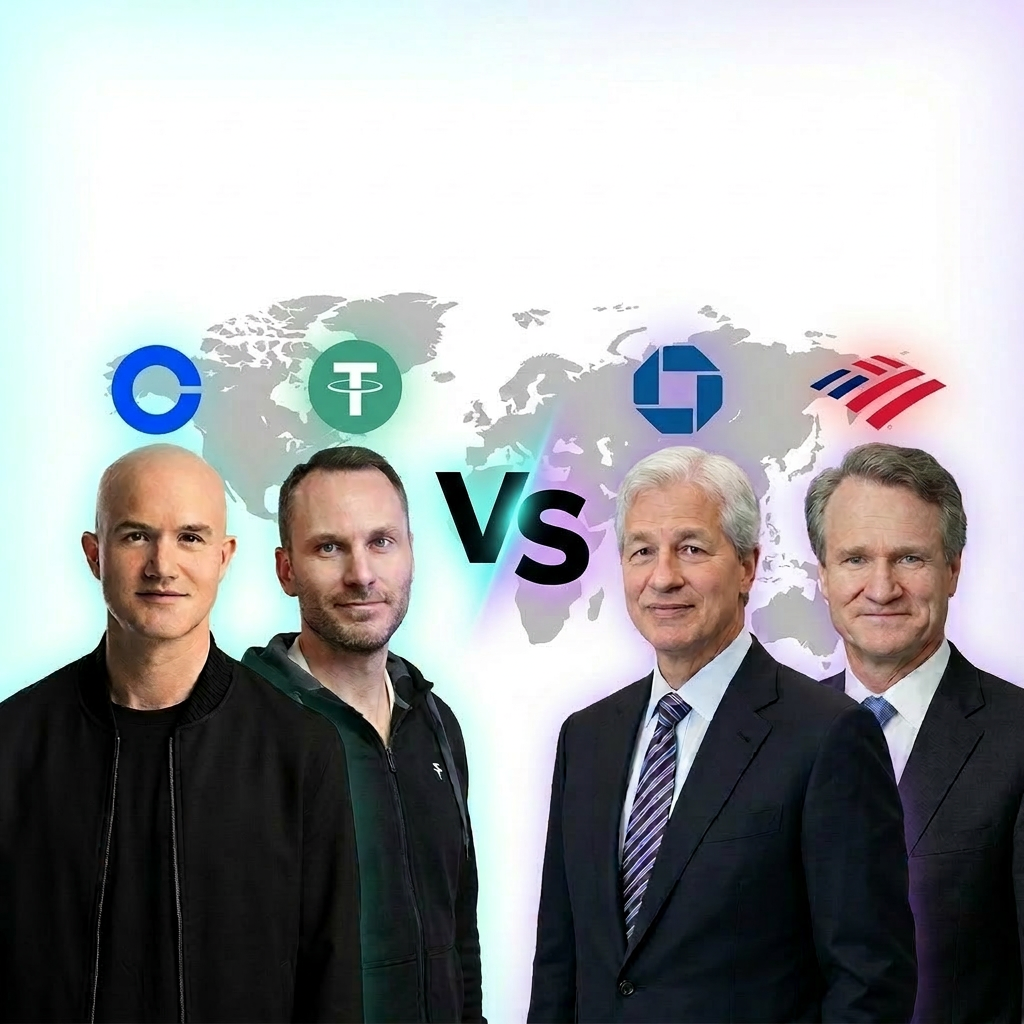
The CLARITY Act missed its March 1 deadline because banks and crypto can't agree on one number: 4.5%.
That's the yield Coinbase pays on USDC. Your bank pays 0.01%. A Treasury study says $6.6 trillion in deposits are at risk.
The most important crypto bill in U.S. history is stuck, with four months before the midterms freeze everything. [RELEASE]
Let’s unpack.
👉PRO: Download the PDF below
What happened
The CLARITY Act passed the House in July 2025 with bipartisan support (294-134). It divides crypto oversight between the SEC and CFTC, creates registration pathways for exchanges, and establishes safe harbors for DeFi builders. The Senate was supposed to finish the job. It didn’t. [RELEASE]
On January 12, the Senate Banking Committee released a 278-page draft that banned stablecoin yield payments. On January 14, Coinbase CEO Brian Armstrong withdrew support. Chairman Tim Scott cancelled the markup. Since then, the White House brokered multiple closed-door meetings. Every session stalled on yield. On February 20, the White House set March 1 as a hard deadline. It passed without a deal. On March 3, Trump accused banks of holding the bill hostage. On March 5, the ABA rejected the White House yield compromise.
“The Genius Act is being threatened and undermined by the Banks, and that is unacceptable. They need to make a good deal with the Crypto Industry because that’s what’s in the best interest of the American People.” — President Donald Trump, Truth Social, March 3, 2026
The mechanics of the standoff:
- The GENIUS Act (law since July 2025) already bans stablecoin issuers — Circle, Ripple — from paying direct yield. That battle is over.
- The gray zone that remains: The GENIUS Act says nothing about intermediaries. Coinbase currently earns ~$1.3B/year offering 3.5% on USDC balances. That revenue stream exists because nobody closed the loophole yet.
- What CLARITY is actually fighting over: Banks want the yield ban extended to exchanges and DeFi platforms. The January 278-page Senate Banking draft sided with banks. Coinbase pulled support for the entire bill in response. The markup was cancelled.
- White House middle path floated: Activity-linked yield only — rewards tied to transactions, not idle balances. Both sides called it unworkable.
- Where it stands now: April Senate “breakout” talks are the next live window. July is the last realistic deadline before November midterms freeze the legislative calendar.
Be smart: CoinDesk reports (March 8) that key Senators may be reviewing a final counter from banks. Senator Tillis is reportedly “very receptive. “Polymarket prices 2026 passage at ~70%. But the political map is messy: 7 Democratic Senators cite Trump family World Liberty Financial conflicts as reason to oppose. Republicans are split between bank-aligned moderates and pro-crypto members. The Senate calendar allows only a few more months before midterm campaigns consume floor time.
The banks have already lost…
- The $6.6 trillion question: JPMorgan and Bank of America cited a Treasury study estimating $6.6 trillion in potential deposit flight if stablecoins offer yield. That’s 30% of total U.S. bank deposits. The asymmetry: your bank pays 0.01% while earning 3.6% on Treasuries. Coinbase passes 4.5% to USDC holders as “rewards.” Circle earned $711M in Q3 2025 from interest on $60B+ in Treasuries backing USDC. The banking lobby’s amendments would ban all intermediary yield sharing.
- The banks may have already lost: While Congress fights over yield, the SEC quietly made stablecoins cash-equivalent on broker-dealer balance sheets. On February 19, the SEC’s Division of Trading and Markets dropped the stablecoin capital haircut from 100% to 2% for qualifying stablecoins. That’s the same treatment as money market funds. Banks lobbied hard to block yield in the GENIUS Act. But the 2% haircut makes stablecoins the best tool for 24/7 wholesale settlement, cross-border payments, and tokenized securities clearing.
- The OCC “Plan B” is already running: While Congress stalls, crypto firms are building federal legitimacy through the OCC. Circle, Ripple, Paxos, BitGo, and First National Digital Currency Bank already hold national trust bank charters. These firms now operate across all 50 states without state-by-state money transmitter licenses. If the CLARITY Act dies, the OCC charter becomes the primary vehicle for federal legitimacy, and the yield question gets resolved through future rulemaking, not legislation.
- We’ve seen this before: In the 1970s, banks fought to block money market funds from offering higher yields than savings accounts. MMFs won. Today they hold $6.3 trillion. The pattern is identical: incumbents lobby to protect cheap funding, a higher-yield alternative emerges through a regulatory gap, and customers migrate. The last time banks fought a higher-yield savings alternative, MMFs went from $0 to $6.3 trillion in four decades. Stablecoin supply is $307B today. The Treasury projects $2 trillion by 2028.
Investor Alpha
Long Infra regardless of yield outcome: Four regulatory unlocks apply to this entire basket simultaneously: (1) OCC national trust bank charters approved for five crypto-native firms, granting federal preemption across all 50 states; (2) SEC’s 2% capital haircut on qualifying stablecoins, making them near-cash on broker-dealer balance sheets; (3) SAB 121 repeal, making crypto custody economically viable off-balance-sheet for global banks for the first time; (4) DTCC tokenization pilot launching 2H 2026, which requires on-chain settlement infrastructure at institutional scale. None of these depend on CLARITY.
The beneficiary stack:
- Custody & Settlement: COIN (Coinbase Custody), BNY Mellon, State Street Digital, Fidelity Digital Assets, BitGo, Anchorage Digital, Fireblocks, Copper, Zodia Custody (Standard Chartered + Northern Trust JV), Nasdaq Digital Assets, Hex Trust
- Stablecoin Issuers & Rails: CRCL (Circle), Paxos, Ripple, PayPal (PYUSD), Anchorage (USAT custodian)
- Market Infrastructure: CME Group (exploring CME Coin; futures already dominant), Broadridge (DLR tokenization platform), DTCC, Cboe Digital
- TradFi building on-chain: BlackRock (BUIDL tokenized fund), Franklin Templeton (FOBXX — first tokenized money market fund on a public blockchain), JPM Kinexys, Goldman Sachs Digital Assets
So what? If you’re an allocator, the trade is infrastructure, not legislation. The SEC’s 2% haircut and five OCC national trust bank charters mean stablecoins are institutional-grade regardless of what Congress does. The yield fight determines when the next wave of capital enters. It does not determine whether it enters.
What to watch next:
- Mar 18: FOMC Interest Rate Decision — Directly sets the T-bill yield that determines how wide the stablecoin yield gap is. A hawkish hold strengthens the bank lobby’s urgency. A dovish signal softens it. This is the most important macro input into the April negotiation dynamics.
- Apr 2026: Senate “Breakout” Negotiations — The first real window for a yield compromise after the March 1 failure. Watch for “qualified investor” language or an activity-based carve-out as the compromise signal.
Watchlist:
- Mar 11: US CPI (Feb) release – critical for Fed rate cut expectations
- Mar 12–15: ETHMumbai 2026 (Mumbai) – Ethereum conference and hackathon
- Mar 16: ETHDC III (Washington) – Ethereum ecosystem and regulatory engagement
- Mar 17: CBC Summit Europe (London) – crypto banking, stablecoins, and MiCA compliance
- Mar 17–18: DC Blockchain Summit (Chamber of Digital Commerce)
- Mar 18: FOMC Interest Rate Decision & Summary of Economic Projections
- Mar 26–27: Global Blockchain Congress (Dubai) – investment-focused blockchain summit
- Mar 30–Apr 2: EthCC 2026 (Cannes) – Europe’s largest Ethereum conference
- Apr 28–29: FOMC Meeting
- Jun 16–17: FOMC Meeting (with Summary of Economic Projections)
That’s it for now.
Missed last week? Access all our CEO notes here.
Marc & Team