

He ran the NYSE, now he's putting it on a blockchain, with Michael Blaugrund, VP at ICE
Hi, it’s Marc. ✌️
We sat down with Michael Blaugrund, the man bridging the world’s most important equity market, the NYSE, on-chain. The platform goes live later in 2026. It’s the biggest change to capital market since electronic trading.
“Irrespective of where crypto asset prices are, the infrastructure momentum at this point is unstoppable.”
All US equities on-chain by 2030? Michael thinks not quite. By 2035? He’s betting yes.
“For a crypto-native investor, the idea of markets being unavailable or the inability to get your funds out at any given moment is a bug, not a feature.”
As the former COO of the New York Stock Exchange and now VP of Strategic Initiatives at Intercontinental Exchange (ICE), Michael ran all seven of NYSE's exchanges through the pandemic, the meme stock frenzy, and the shift to electronic-only trading. He testified before the US House Financial Services Committee in 2021 following the GameStop saga.
If you’re a bank, an asset manager, or a broker still waiting for “clarity” before acting on tokenization, here’s Michael’s advice:
“You better find another industry. It’s just not going to be a sustainable worldview.”
Today, he’s building ICE’s on-chain future. And this isn’t ICE’s first move:
- The firm quietly invested in Coinbase in its early rounds,
- launched the digital custodian Bakkt,
- helped bring Bitcoin ETFs to market through the NYSE Arca platform,
- put $2 billion into Polymarket at an $8 billion valuation, one of the largest investments by any traditional exchange in the crypto space,
- partnered with BNY and Citi on tokenized deposits across six clearinghouses,
- joined LayerZero's Zero blockchain initiative alongside Citadel Securities, DTCC, Google Cloud, and ARK Invest
And yesterday, it invested in one of the biggest crypto exchanges on the planet: OKX, valued at $25 billion.
In short: ICE has been watching this space for over a decade. Now it's moving it into the core of the business, and Michael is steering the wheel.
 Marc Baumann
 Marc Baumann
 Marc Baumann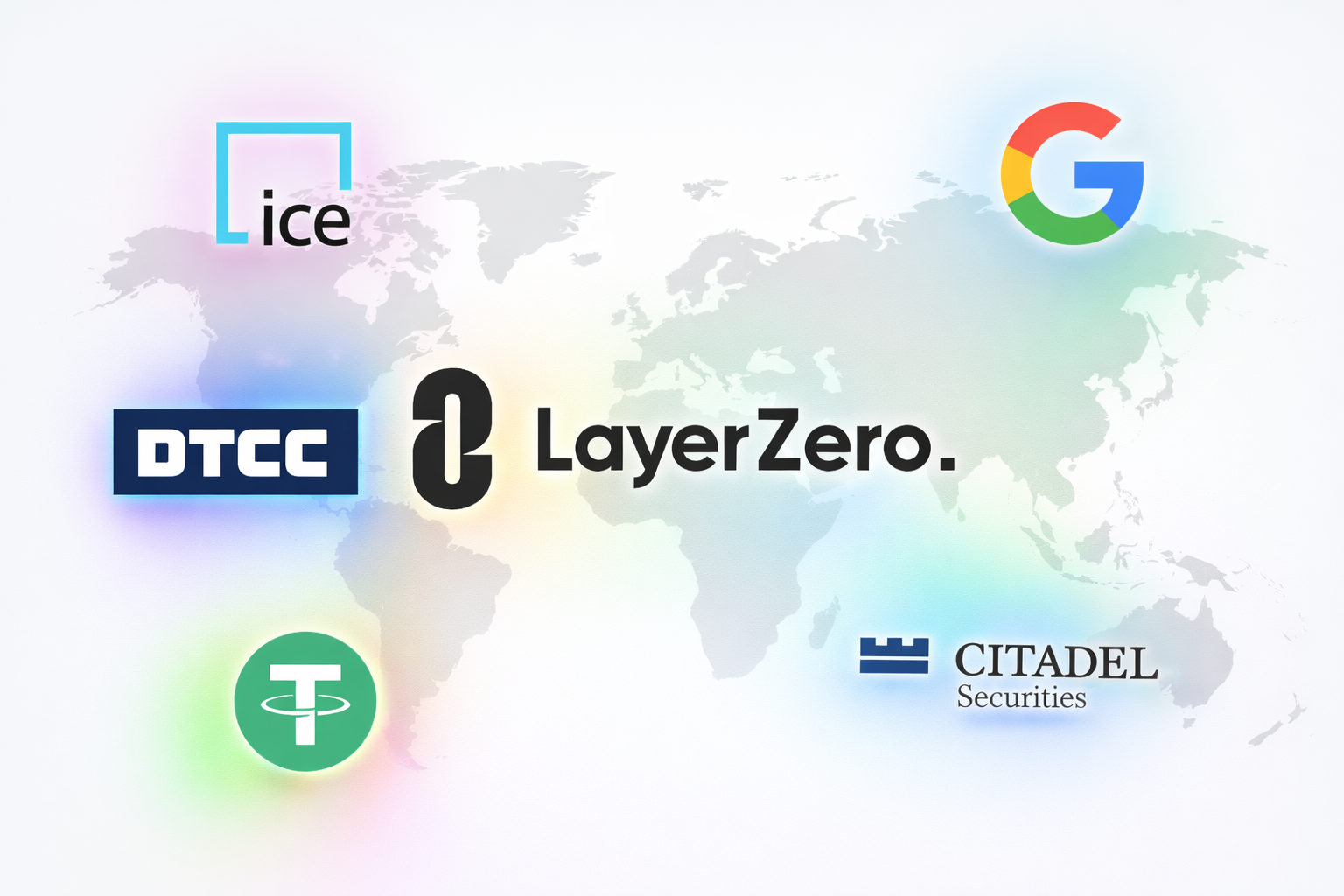
🚨We’re opening sponsorships for our next podcast series. Top guests. Serious listeners. Claim your spot →
About this episode: We get into what the NYSE’s 24/7 tokenized trading venue actually means, why the real transformation isn’t the trading platform but the collateral infrastructure, what ICE sees in Polymarket, and why Michael thinks the shift will be slow until it’s suddenly very fast.
🎧 Jump to the best parts
00:00 The Future of Trading: Tokenization at NYSE
01:16 Challenges in Equity Markets and Solutions through Tokenization
08:46 Understanding NYSE's Tokenization Platform
14:59 Layer Zero and Blockchain Innovations
21:15 Decentralization vs. Regulation in Blockchain
23:39 Tokenizing US Treasuries vs. Equities
26:01 The Role of DeFi in Future Markets
28:31 Transformative Potential of Tokenized Deposits
32:54 Investing in Prediction Markets: The Polymarket Case
35:24 Looking Ahead: ICE's Strategic Focus
37:04 Preparing for the Future of Capital Markets
Important Links
- LinkedIn: https://www.linkedin.com/in/michael-blaugrund
- NYSE: https://nyse.com/
- Instagram: https://www.instagram.com/michaelblaugrund/
- SIFMA: https://www.sifma.org/people/michael-blaugrund
Watch or listen now:
YouTube • Apple Podcasts

My biggest takeaways from this conversation:
1. Market downtime is officially a legacy “bug”
Before you can understand what the NYSE is building, you need to understand what it’s replacing.
Today’s equity market infrastructure assumes systems will go offline. It assumes trades settle two days later. It assumes shares trade in whole numbers and that getting your money out isn’t something you can do on a Sunday night. For anyone who’s ever used a crypto exchange, that list reads like a list of bugs.
Traditional players are already acting on it. Not on the NYSE; recently, CME Group is launching 24/7 trading for its cryptocurrency futures and options on the Globex platform, starting May 29, 2026, to meet high demand for round-the-clock risk management.
Michael puts it bluntly.
"For anybody who grew up as a crypto native investor, the idea of having markets down and unavailable, the inability to transfer funds or get your funds out at any given time, it's just sort of a bug and not a feature of the marketplace."
The US equity market is, in his words, “hyper liquid, hyper efficient, and broadly democratic.” But some of the infrastructure underpinning it “has been built for a time when we always expected there to be system downtime.” That tension, between the quality of the market and the age of the plumbing, is exactly what the NYSE’s new platform is designed to address.
The GameStop episode in 2021 exposed just how consequential those bugs could be. Because stocks settled two days after a trade, clearing firms had to post collateral to cover the risk of a failed settlement during that window. In an extreme market event, those collateral obligations hit levels nobody had planned for. Some brokers had to stop customers from buying certain stocks. It felt, to many people, like the system was rigged.
Michael doesn’t think it was rigged. But he does think it revealed something important.
“It exposed this real consequence of some archaic infrastructure.”
And had instant settlement been available at scale in 2021, he believes,
“We had these types of features available at scale in 2021, you might have had very, very different outcomes.”
The NYSE’s new platform is designed from first principles to fix exactly that, with instant settlement, 24/7 trading, fractional shares, and stablecoin-funded purchases.
2. The NYSE isn’t replacing its exchange. It’s building alongside it.
This is an important distinction and one that gets lost in the headlines.
The announcement wasn’t that NYSE is moving all stocks onto a blockchain. It’s that NYSE is launching a new venue alongside its existing exchanges where tokenized equities can trade and settle instantly against stablecoins. The logic behind running both in parallel is deliberate. As Michael explains,
“We don’t want to disrupt the core of the existing US equity infrastructure while we’re beginning to have the industry become acclimatized to this new type of interaction.”
The existing infrastructure stays intact. The order entry protocols, the broker connections, the regulatory conventions, none of that changes. What changes is what happens after a trade executes. Instead of clearing at the DTC, waiting through T+1 settlement, and posting margin in the interim, the post-trade activity moves to an on-chain ledger managed within NYSE’s own data centre.
“We’re employing blockchain technology without really having a very significant regulatory policy requirement. We think that’s a good place to start.”
The securities themselves can come from two places:
- Digital native issuers like Securitize, or
- The DTC’s own tokenization service, which is being built to tokenize the Russell 1000 securities in book entry form.
For broker-dealers already connected to NYSE, the path to participating is deliberately low friction. They’ll use the same order entry technology, the same connection protocols they already use today. Michael describes it as “a very easy glide path for all of the broker-dealers that currently interact with NYSE.”
The new work is on the back end: learning to manage wallets and on-chain inventory. But ICE plans to offer out-of-the-box solutions to ease that transition.
The platform won’t be for institutional investors at first, and that’s by design. “A lot of this workflow and usability and user experience has come from retail,” Michael says. But the groundwork being laid now is what makes institutional participation possible later.
Related podcast and reads:
Marc Baumann Marc Baumann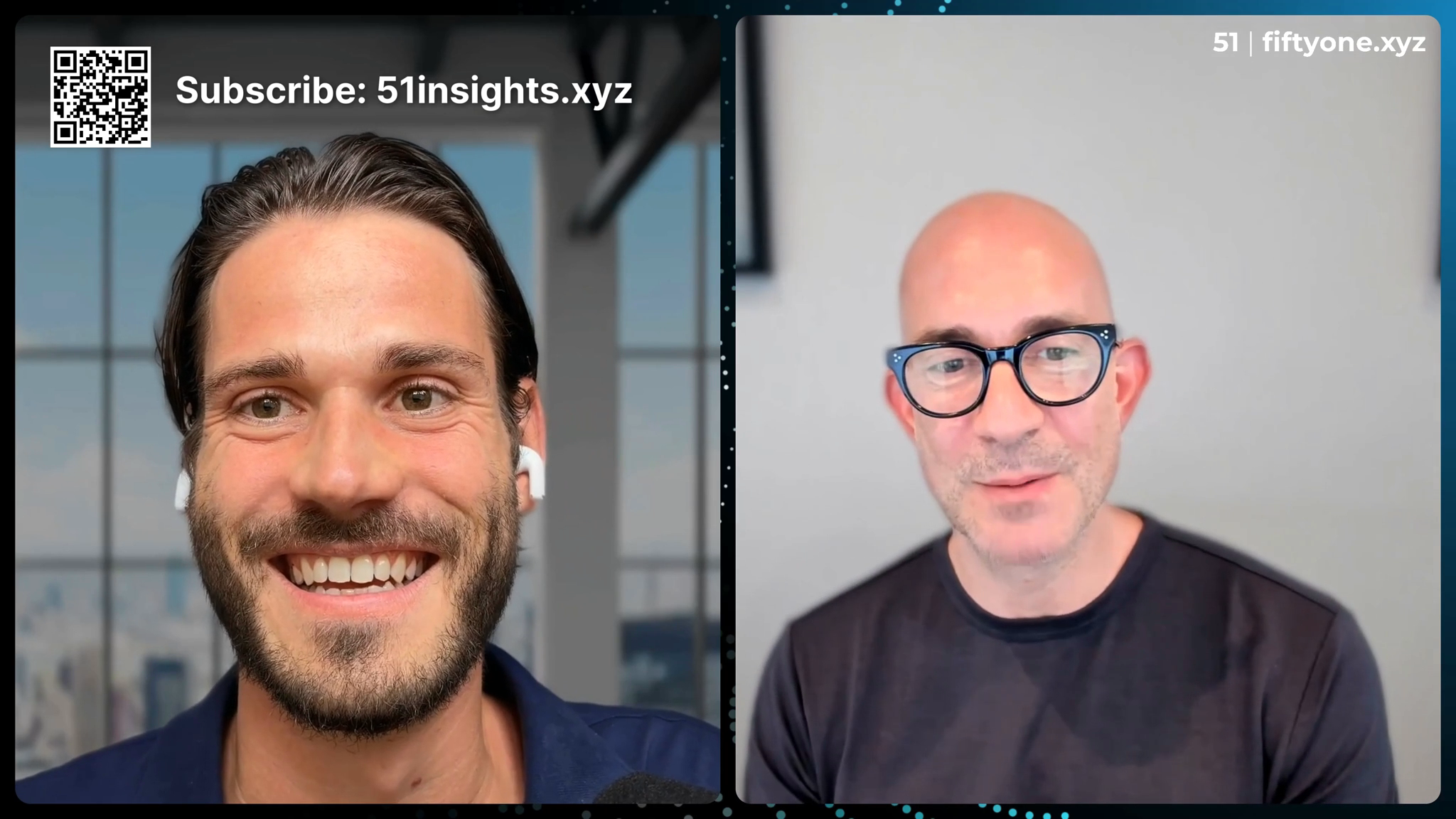
3. One chain won’t rule them all
When we got into the technology stack, Michael was refreshingly direct: nobody is betting on a single blockchain.
ICE recently announced a partnership with LayerZero Labs, which is building Zero, a new Layer 1 blockchain alongside partners including Citadel Securities, Google Cloud, ARK Invest, and Tether. Layer Zero claims Zero can handle 2 million transactions per second, roughly 100,000 times as much as Ethereum and 500 times as much as Solana.
But Michael’s view on the infrastructure question isn’t about picking a winner.
“The most probable future is one in which there’s low friction, low cost, and you’re going to see different technologies and different techniques applied for different parts of the stack.”
He illustrates the point with a practical example. ICE’s six global clearinghouses hold between $100 and $200 billion in collateral on any given day. Those collateral movements are infrequent but enormous in value, a totally different performance requirement than running a real-time order book for an active equity or options series.
“Something more battle tested, bulletproof, but maybe higher throughput, might work for the clearinghouse, but it would be totally incompatible with the need for going to do something on chain with matching.”
The result, he says, is that:
“Organizations like us are often going to have to create a mosaic of different tech in order to be most effective.”
ICE has clearinghouses, exchanges, mortgage technology, and data businesses. It’s highly likely, in his view, that each will use a different combination of on-chain infrastructure suited to its specific needs.
On the question of decentralisation, Michael doesn’t dodge it. He acknowledges the tension directly:
“There’s going to be a tension during this period of trying to adapt well-regulated markets that depend on intermediation with the promise of something that’s more decentralized and allows for permissionless creativity.”
ICE will continue to operate in a well-regulated way. But they’re watching the innovations occurring globally and looking for ways to participate as the regulatory environment opens up.
Related reads:
Marc BaumannMarc Baumann
4. The real transformation is happening in the clearinghouses
ICE runs six global clearinghouses across the US, Europe, and Singapore. On any given day, those clearinghouses hold somewhere between $100 and $200 billion in collateral to ensure that when derivatives contracts settle, everyone gets paid.
Here’s the problem. A clearing member active in New York, London, and Singapore has obligations in all three places. But capital moves in local banking hours, on local banking calendars. If there’s a margin call in Singapore when the New York banking system is closed, that member can’t move excess collateral from New York to cover it. So instead, they over-collateralise everywhere. They park more capital than they need in every jurisdiction, just in case.
“The result is a lot of trapped capital that’s not otherwise being put to more productive uses.”
ICE, working with BNY and Citi, is building the infrastructure to change that. Tokenized deposits, effectively digital cash held at a bank, can move between geographies in real time to meet margin obligations outside of traditional banking hours.
The first step is intra-bank movements. If someone has deposits at BNY in both New York and Singapore, they can now move them to meet a clearing obligation regardless of the time or day.
Because the real ambition is what comes next.
“The expansion beyond cash, to treasuries tokenized, to tokenized money market funds, stablecoins, tokenized securities, and potentially even crypto assets themselves serving as good collateral in the clearing houses.”
That, he says,
“Collateral has the potential to be much more transformative, in many respects, particularly for institutional investors, than tokenized trading itself might be.”
Banks and financial clients are expected to start adopting tokenized deposits this year. The broader collateral menu will take multiple years. There are still legal questions, regulatory questions, and liquidity risk considerations to work through.
Related Reads:
Marc Baumann Marc Baumann
 Marc Baumann
5. Polymarket is a bet on three things at once
ICE’s $2 billion investment in Polymarket, valuing it at $8 billion, is one of the largest investments by any traditional exchange in the crypto space. It’s worth understanding why.
- A new asset class: Prediction markets are growing explosively and bringing a new generation of quantitative thinkers into financial markets. “The idea that you can sort of have markets on outcomes is just fascinating to us.”
- Data feeds: The signals coming from prediction markets, what the crowd thinks will happen in an election, a geopolitical shift, an economic announcement, carry real value for traditional finance. “The signal that can be produced from prediction markets is tremendously valuable to traditional finance.” ICE now has an exclusive relationship to distribute that data into the institutional capital markets space.
- Integration to DeFi: Polymarket is, in Michael’s words, “simply one of the most sophisticated live DeFi platforms on the planet.” It has already solved, from first principles, many of the problems that ICE is now grappling with: how to run non-custodial, smart contract-based markets at scale.
“In many ways, they’ve already solved a lot of those problems from first principles. So working with Shane and his team, we’re learning a lot.”
This investment is as much an education as it is a financial bet. And as Polymarket re-enters the United States, ICE is also helping them navigate that process with three themes and three different kinds of value. That’s what made it, in his words, “a perfect fit.”
Bottom line
Michael is not predicting what might happen to financial market infrastructure. He's building it. He is realistic about the timeline. He doesn’t expect the entire US stock market to move on-chain overnight. Instead, the NYSE is building a “parallel” venue. This allows the industry to acclimate to wallets and on-chain ledgers without disrupting the trillions of dollars flowing through the current system.
What makes this conversation valuable is the combination of ambition and pragmatism. The trading platform is the visible part. The clearinghouse infrastructure, the 24/7 collateral mobility across six global venues, is where the deeper transformation is happening. And the Polymarket investment is where ICE is actively learning what comes after that.
All US equities on-chain by 2030? Michael thinks not quite. By 2035? He’s betting yes.
Take care,
Marc
- Check out our Crypto Treasury Alpha newsletter here.
- Check out our AI newsletter, AI Operator, here.