
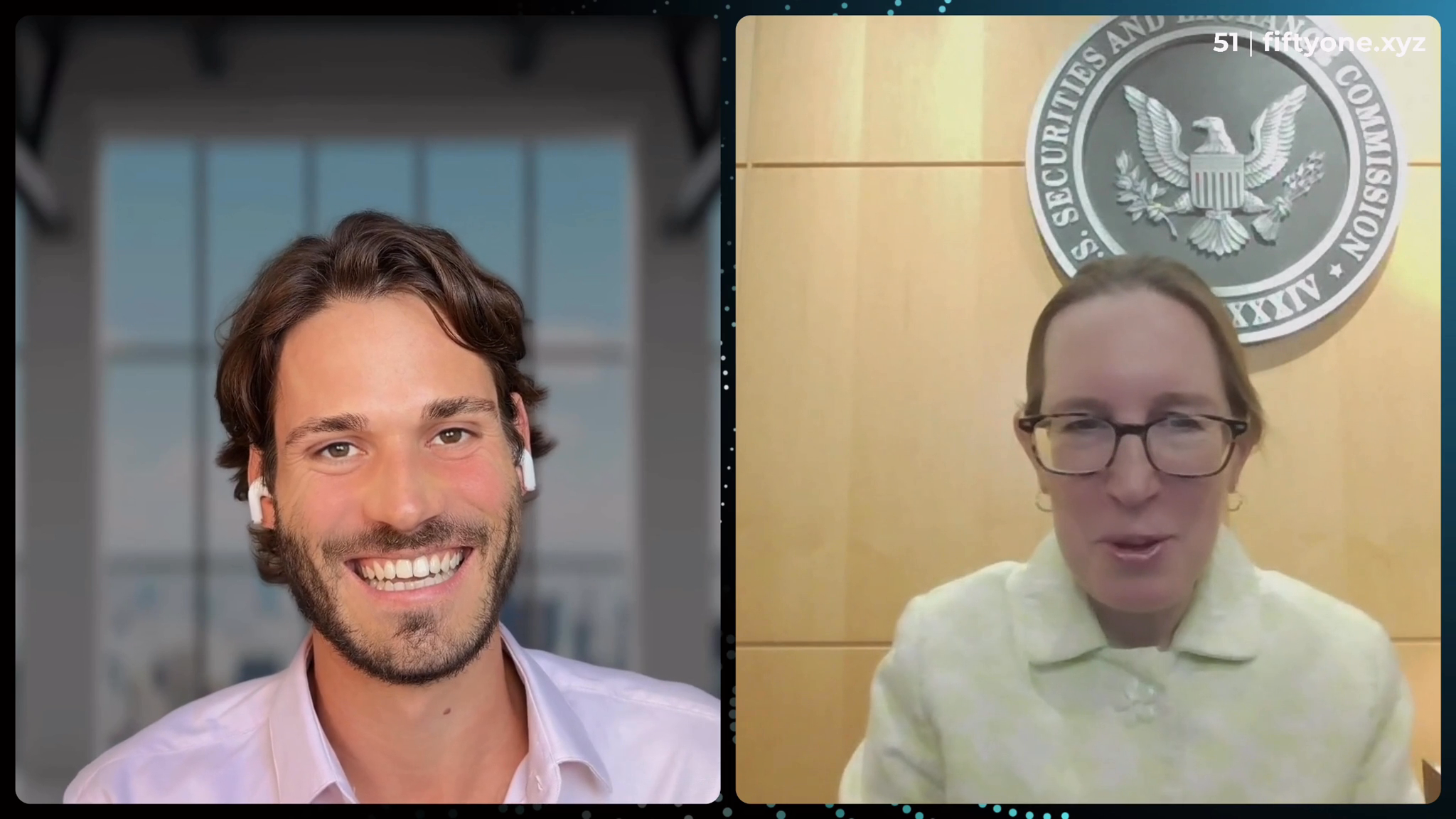
"I apologize", SEC Commissioner Hester Peirce on Crypto's New Rules
Hi, it’s Marc. ✌️
An SEC Commissioner just apologized to the crypto industry. On the record. To us.
“The regulatory approach made your lives a lot more difficult. I’ve talked to people who really were hurt. I do apologize for that.”
That’s Hester Peirce, who spent eight years as the SEC’s lone crypto dissenter and now leads its entire Crypto Task Force. The woman who quoted the cypherpunk manifesto from a government podium and wore protest t-shirts during commission meetings just filed the first-ever token classification framework with the White House.
The timing is perfect. This week, the SEC and CFTC published their first joint digital asset guidance. The stablecoin capital haircut dropped from 100% to 2%. And the token taxonomy Peirce helped architect is now sitting in the federal regulatory pipeline, potentially live by mid-2026.
I wanted to understand what’s actually changing inside the building, not the press releases, the thinking. Here’s what she told me.
About Hester: Yale Law. Former Goldman-era SEC staff attorney. Counsel to Paul Atkins (now SEC Chairman). Directed the Financial Markets Working Group at George Mason’s Mercatus Centre. She’s led the Crypto Task Force since January 2025 and co-authored Project Crypto, steering the agency from enforcement-first to rules-based.
🚨We’re opening sponsorships for our next podcast series. Top guests. Serious listeners. Claim your spot →
🎧 Jump to the best parts
- 00:00 Introduction to Hester Purse and Her Journey
- 01:50 Balancing Regulation and Freedom in Finance
- 04:35 Understanding Project Crypto and Its Goals
- 06:54 The SEC's Token Taxonomy Submission
- 08:47 Progress and Challenges in Crypto Regulation
- 10:48 The Shift in SEC's Stance on Crypto
- 12:14 Legislative Developments: Genius Act and Clarity Act
- 15:49 Political Influence on Crypto Regulation
- 18:52 Surveillance and Privacy in the Financial System
- 22:11 Meme Coins: Risks and Opportunities
- 26:44 Stablecoin Haircuts and Regulatory Guidance
- 28:22 Project Crypto's Institutional Credibility
- 30:38 The Impact of Stablecoins on U.S. Treasuries
- 31:21 NFTs and DeFi: Future Innovations
- 34:26 Learning from Past Regulatory Mistakes
- 35:55 Hester's Goals Before Her Term Ends
- 37:19 Innovation Exemption and Market Dynamics
- 38:27 Looking Forward: The Future of Crypto Regulation
- 42:15 Final Thoughts for Innovators in Crypto
Important Links
- Wikipedia: https://en.wikipedia.org/wiki/Hester_Peirce
- SEC: https://www.sec.gov/about/sec-commissioners/hester-m-peirce
- X: https://x.com/HesterPeirce
- SEC Crypto Task Force: https://www.sec.gov/featured-topics/crypto-task-force
Watch or listen now:
YouTube • Apple Podcasts
On this topic
 Marc Baumann
 Marc Baumann
 Marc Baumann
My biggest takeaways from this conversation:
1. The SEC isn't pro-crypto. It's pro-rules. That's more valuable.
Don’t confuse what’s happening here. The SEC didn’t wake up bullish. It stopped being hostile. And for capital allocation purposes, that distinction matters more than any endorsement ever could.
Peirce put it plainly:
“We went from being anti-crypto to not pro-crypto, but proactive in the sense that we’re trying to get to clarity. We’re not trying to put our thumb on the scale in favor of any particular asset or even any particular technology.”
Peirce’s position is that the SEC’s existing authority is broad enough to provide meaningful clarity right now, without waiting for Congress to resolve its internal politics.
“Getting it right is important, and I think if Congress can do that, then it will really form the basis for this sector of the economy for many years to come.”
The jurisdictional map is finally being drawn. Tokenised securities land with the SEC. Everything else lands with the CFTC, now headed by Mike Selig, the former chief counsel of the very crypto task force Peirce leads. That alignment between the two regulators is not accidental. It is the architecture.
Related reads:
Marc Baumann Marc Baumann
2. The token taxonomy might be the most important crypto document nobody’s read
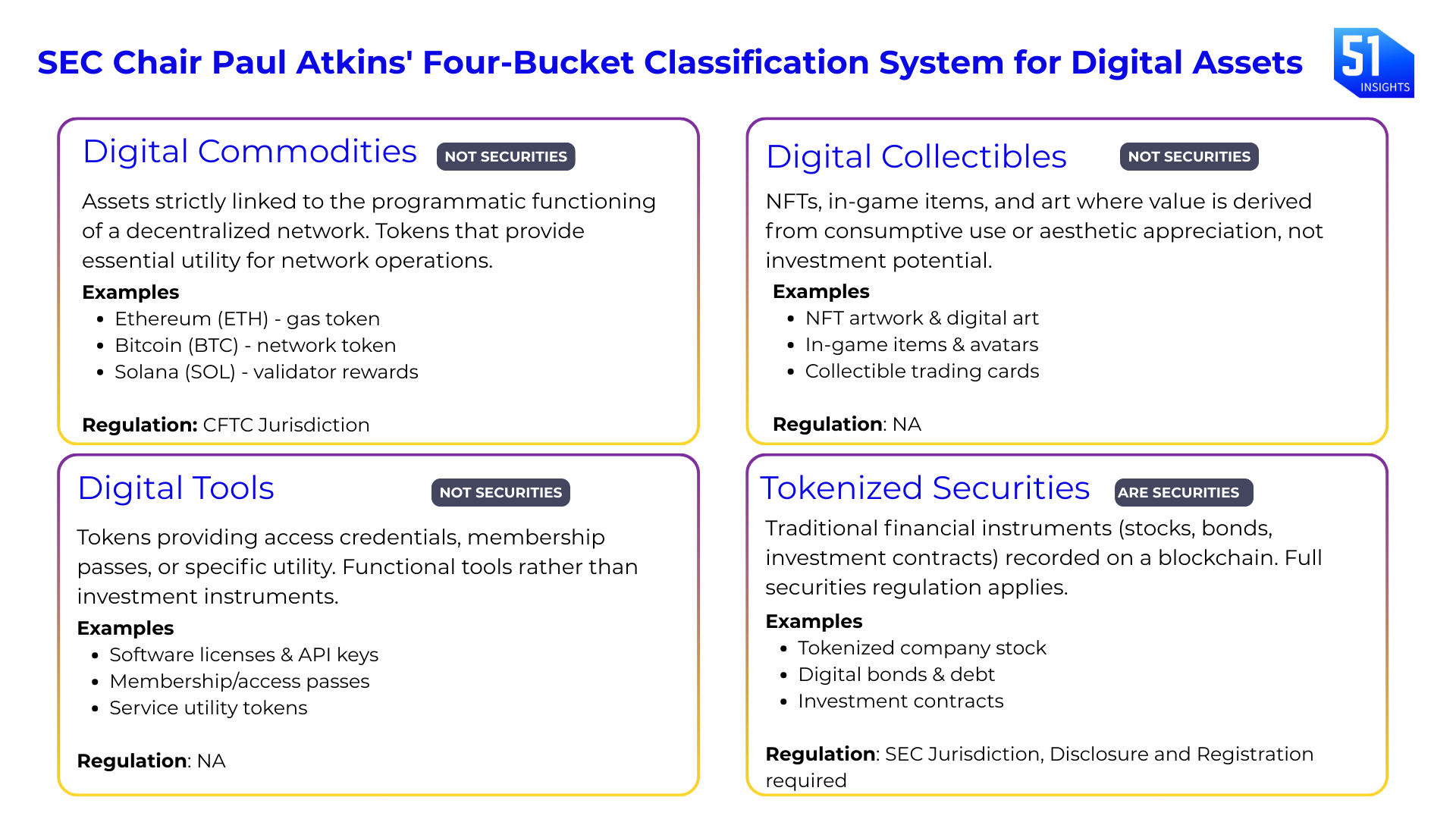
On March 3, the SEC submitted a Commission-level classification framework to the White House for interagency review. Four categories: digital commodities and network tokens, digital collectibles, digital tools, and tokenized securities. Only the last one stays under SEC jurisdiction.
The conceptual shift that matters: an investment contract can expire. A token sold as part of a securities transaction doesn’t remain a security forever just because it keeps trading.
“We’ll help people understand how we’re thinking about what an investment contract is, when it ceases to travel with a token.”
If the White House completes its 90-day review on schedule, this framework goes live by mid-2026. That gives the industry its first real regulatory map. Not guidance-by-enforcement. An actual map.
Peirce was careful not to preview the details, but she confirmed the taxonomy is coming soon and aligns with what Congress is working on in the CLARITY Act. If the White House completes its review within the standard 90-day window, this framework could be live by mid-2026, giving the industry its first real regulatory map.
“We’ll help people understand how we’re thinking about what an investment contract is, when it ceases to travel with a token.”
Related reads:
Marc Baumann
3. The 2% stablecoin haircut is a quiet earthquake
On February 19, the SEC cut the capital charge on payment stablecoins from 100% to 2% for broker-dealers. That puts stablecoins on par with money market funds. Until this change, most broker-dealers treated stablecoins as worthless for capital purposes, which made it economically impossible to hold them.
“Stablecoins are essential to transacting on blockchain rails. Using stablecoins will make it feasible for broker-dealers to engage in a broader range of business activities.”
Every institutional conversation about on-chain settlement was theoretical until this guidance dropped. Now it’s operational. Peirce also flagged that the task force is open to going further, including removing the no-netting restriction that limits how trading desks offset long and short stablecoin positions.
Related Reads:
Marc Baumann
4. Peirce wants crypto to build privacy tools. And she’s telling regulators to accept them.
This is where the conversation got interesting. Peirce argued that the U.S. financial system has become a surveillance apparatus and that public blockchains, paradoxically, make it worse. If everyone can see how much you earn and who you donate to, that’s not transparency. That’s surveillance with extra steps.
“We as a society have relied more and more on the financial system to surveil American citizens. I’d really like us to take a hard look at how we’re doing surveillance in the financial system.”
She’s explicitly telling builders to develop privacy-enhancing technology and telling her fellow regulators to embrace it. Whether that signal survives her departure is an open question. But the window is open right now.
Bottom line
Here’s the thing that stuck with me after hanging up. SEC commissioners aren’t allowed to use crypto wallets. They can’t hold digital assets. Peirce writes the rules for technology she’s not permitted to touch. She told me she’s grateful to people who’ve come in to do demos so she can at least see what a wallet looks like.
That captures the entire era. The people writing the rules and the people building the products are operating in different realities. But the gap is closing. The SEC is drawing maps. The CFTC is aligned. The token taxonomy is coming. The stablecoin plumbing is in place. Someone at a recent event told Peirce it’ll be a good day when regulators aren’t even at crypto conferences anymore, when people are just building and complying because the rules are clear.
After eight years of dissents and cypherpunk quotes from the podium, she said she’s looking forward to that day. But she’s not done yet.
Take care, Marc
Marc
- Check out our Crypto Treasury Alpha newsletter here.
- Check out our AI newsletter, AI Operator, here.