
Why the application layer is crypto’s next $10T opportunity, with Richard Galvin, CIO of DACM
Hi, it’s Marc. ✌️
"We think the space now moves to a growth phase where the underlying build-out is largely done and value really shifts to the applications that sit on top.”
That’s Richard Galvin, Executive Chairman and Chief Investment Officer at Digital Asset Capital Management (DACM), describing the most compelling arbitrage in crypto right now.
Richard’s thesis is simple but profound: The era of investing only in "Blockchains" (Layer 1s) is ending. The era of "Applications" is beginning.
In our conversation, he breaks down a staggering statistic: Application revenue now represents nearly 70% of the entire crypto revenue pool, yet these apps account for only 7% of total market value.
“We’ve built the supply. Block space is now cheap, fast, and commoditized. We don’t need more blockchains; we need more users. The value is migrating from the ‘pipes’ to the ‘services’ and the market hasn't priced it in yet.”
About Richard: Richard Galvin is the Executive Chairman and Chief Investment Officer (CIO) of Digital Asset Capital Management (DACM)1, a global investment firm specialising in digital assets and cryptocurrencies. He co-founded DACM in 2017 after a 20-year career in senior investment banking. His previous roles include serving as Head of Equity & Derivative Capital Markets (Australia) at JPMorgan and as Co-Head of TMT Investment Banking at Goldman Sachs JBWere.
As of late 2025, he also serves as a member of the Board of Directors at Bakkt Holdings, Inc. (NYSE: BKKT), a digital asset services platform.
🚨 We just opened new sponsorship slots for our podcast. Want to reach 35k+ digital asset leaders? Contact us here.
🎧 Jump to the best parts
- (02:09) → The Canary in the Coal Mine: Why crypto is the leading indicator for macro liquidity and what it’s telling us about the next 12 months.
- (05:49) → The Great Altcoin Devaluation: Why fundamentals (users, revenue) are up triple digits while token prices are down 70%—and why this is a “value investor’s dream.”
- (10:50) → The Dotcom Parallel: Why L1s (Solana, Ethereum) are the “Cisco” of this cycle, and why the “Amazon” of crypto is currently sitting in the application layer.
- (13:02) → The 70/7 Mispricing: Richard breaks down the math: 70% of industry revenue comes from apps, but they hold only 7% of the market cap.
- (18:37) → From Lending to Meme Coins: Why Richard is bullish on both the “serious” (Aave) and the “speculative” (Pump.fun) as drivers of mass adoption.
- (33:52) → The 2035 End State: Why your grandmother will use DeFi without ever knowing what a “private key” is.
Important Links
- LinkedIn: https://au.linkedin.com/in/richard-galvin-b336808
- X: https://x.com/richwgalvin
- Medium: https://medium.com/@richard.galvin
- DACM: https://www.dacm.io/
- AIMA: https://www.aima.org/
🎙️ In our conversation, we discussed:
- The 4-year cycle is dead (but the market hasn't caught up yet): Unlike previous boom-bust cycles where the same retail cohort chased returns, today's crypto is dominated by sophisticated institutions with fundamentally different investment behaviors. This should compress volatility and extend growth cycles.
- Why he's bearish on 2025 (but still bullish long-term): Crypto is currently weaker than most asset classes, driven by a drop in corporate treasury buying (which artificially propped up prices) and capitulation from investors front-running a non-existent cycle. This is actually healthy, it's removing speculation.
- The internet parallel everyone gets wrong: In the 1990s, people thought infrastructure companies would hold all the value. But infrastructure (Cisco, Nortel) became commoditized. Applications (Google, Amazon) captured the upside. Same thing is happening in crypto right now. We explore how.
- Why Solana applications are the most mispriced: Solana has the fastest growth, highest revenues, lowest transaction costs (~$0.00001), yet applications trade at discounts to other ecosystems. The market sees volatility and competition as downsides. Richard sees them as proof of health.
Watch or listen now:
YouTube • Apple Podcasts
Recommended podcasts:
 Marc Baumann

My biggest takeaways from this conversation & who to bet on:
1. The dot-com parallel (& the 10x mispricing)
Richard argues that this infrastructure build-out is largely complete. Block space is now cheap, fast, and commoditized. Richard draws a direct comparison to the dot-com era. In the mid-90s, the smart trade was infrastructure. Cisco, Nortel, and Qualcomm. They provided the building blocks for the internet.
Then (1990s-2000s):
- Infrastructure companies (Cisco, Nortel, Qualcomm) got 80%+ of valuations
- Application companies (Amazon, Google) were speculative bets
- Reality: Applications captured 100% of long-term value growth
Now (2020s-2030s):
- Layer 1 infrastructure (Ethereum, Solana, Avalanche) gets 93% of market cap
- Application layer (Uniswap, Aave, Pump.Fun) gets 7% of market cap despite generating 70% of revenue
- Reality: Applications will capture most of the value creation
“We’ve seen with that capacity, as we saw that sort of the supply of the internet, so to speak, and the other applications, broadband and the other functionality getting faster and faster, allowing people to build more constructive, more user friendly apps... The value transfer from those people that originally built out the supply to those that were using the supply to actually monetize it to users.”
He ads:
“We think that build out is now largely done... value really shifts to that application layer.”
In crypto, we are at the "Broadband Moment". As corporate chains like Robinhood or Circle spin up their own block space, the protocol layer becomes a commodity. The winners will be the apps that own the user relationship, not the chains that settle the transactions
In short: applications will be bigger than infrastructure.
2. Applications are massively undervalued
This is what sets this cycle apart. The revenue is exploding while prices stay low:
“We’ve seen revenues grow, we’ve seen user bases grow—triple digit, mid-triple digit gains for a bunch of apps and that across the space, yet their coins are down, their tokens are down 60, 70, 80%.”
Here’s the macro picture:
“Application revenue today is around about mid 60s to almost 70% of the entire revenue pool... but it still represents only 7% of the space.”
Richard drives the point home:
“We have seen a massive devaluation of the broad crypto space this year because fundamentals have increased, earnings have increased, users have increased. All those sorts of metrics that should drive value longer term have been super strong, yet prices are really weak.”
Investors should view this as a value play. While L1 tokens trade on speculative premiums, applications like Aave or Pump.fun are generating hundreds of millions in revenue with triple-digit growth. The market is effectively pricing the "pipes" at a massive premium over the "utility" flowing through them
Richard sees this as the highest risk-reward he's seen in his 25-year career.
3. The Death of the Four-Year Cycle
Richard argues cycles are driven by the same cohort of people repeating the same behaviors. Today, the owners of crypto are different—institutionalization has brought in diverse horizons and return profiles that don’t align with the retail-driven boom-bust cycles of 2017 or 2021.
“I think cycles perpetuated when you have the same people operating in the same market over an extended period of time... the owners of crypto today are very different.”.
While many investors are front-running a “terrible 2026” based on past charts, the fundamental revenue growth suggests a more prolonged, less volatile trajectory. This “institutionalization” means the ups and downs will be more muted, rewarding patient capital over speculative momentum
4. Don’t be a tech snob
Richard points out that many traditional investors miss the biggest winners because they look down on “unserious” or “speculative” use cases.
People thought cat videos on YouTube were a waste of bandwidth. Those "videos" built a trillion-dollar creator economy.
“If you'd spoken to me in the mid-1990s and said 'What's going to be the killer driver of viral activity in broadband?' I wouldn't have seen cat videos. We try not to be too snobbish around how people are going to choose to use crypto. We look at where people are willing to pay and where we can see durable long-term use cases.”
Whether it’s Aave for lending or Pump.fun for meme coins, the metric that matters is revenue and product-market fit. Richard notes that "the top seven fastest companies in the history of the world to generate $100 million in revenue are crypto companies." Ignore the "noise" and follow the money.
Our view
The "crypto trade" has fundamentally changed from a bet on infrastructure scarcity to a bet on application utility.
Who wins by the logic of Richard Galvin:
- Distribution Kings: Apps that own the “front-end” (E.g.: AAVE)
Marc Baumann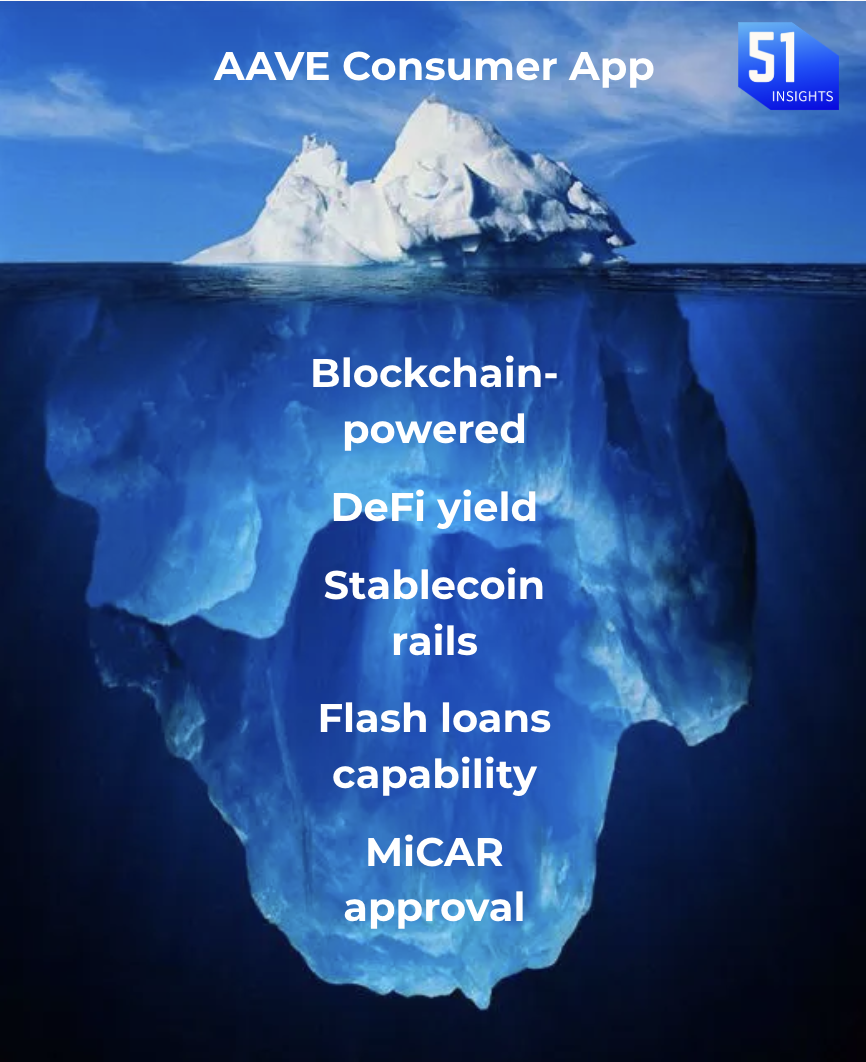
- High-Velocity Chains: Solana (currently optimized for the “micro-transaction” economy Richard envisions)
Marc Baumann
- Institutional-Grade DeFi: Protocols that have been “battle-tested” through multiple 80% drawdowns and come out with their code (and reputation) intact.
Take care,
Marc
- Check out our Crypto Treasury Alpha newsletter here.
- Check out our AI newsletter, AI Operator, here.
Quick Notes on DACM’s Funds:
Venture Fund (since August 2018): Early-stage tokens and protocols, long lockups, early exposure to projects pre-listing
Digital Asset Fund (since January 2018): Liquid crypto portfolio, concentrated on application layer and undervalued Solana apps
Yield Fund (since January 2020): DeFi income strategies (lending, trading fees) hedged for volatility, targeting 15-20% annual yields with lower drawdowns
DACM is positioned exactly where Richard’s thesis predicts value will accrue: venture + liquid applications + DeFi income. This gives them first-mover advantage on the thesis play-out. ↩