
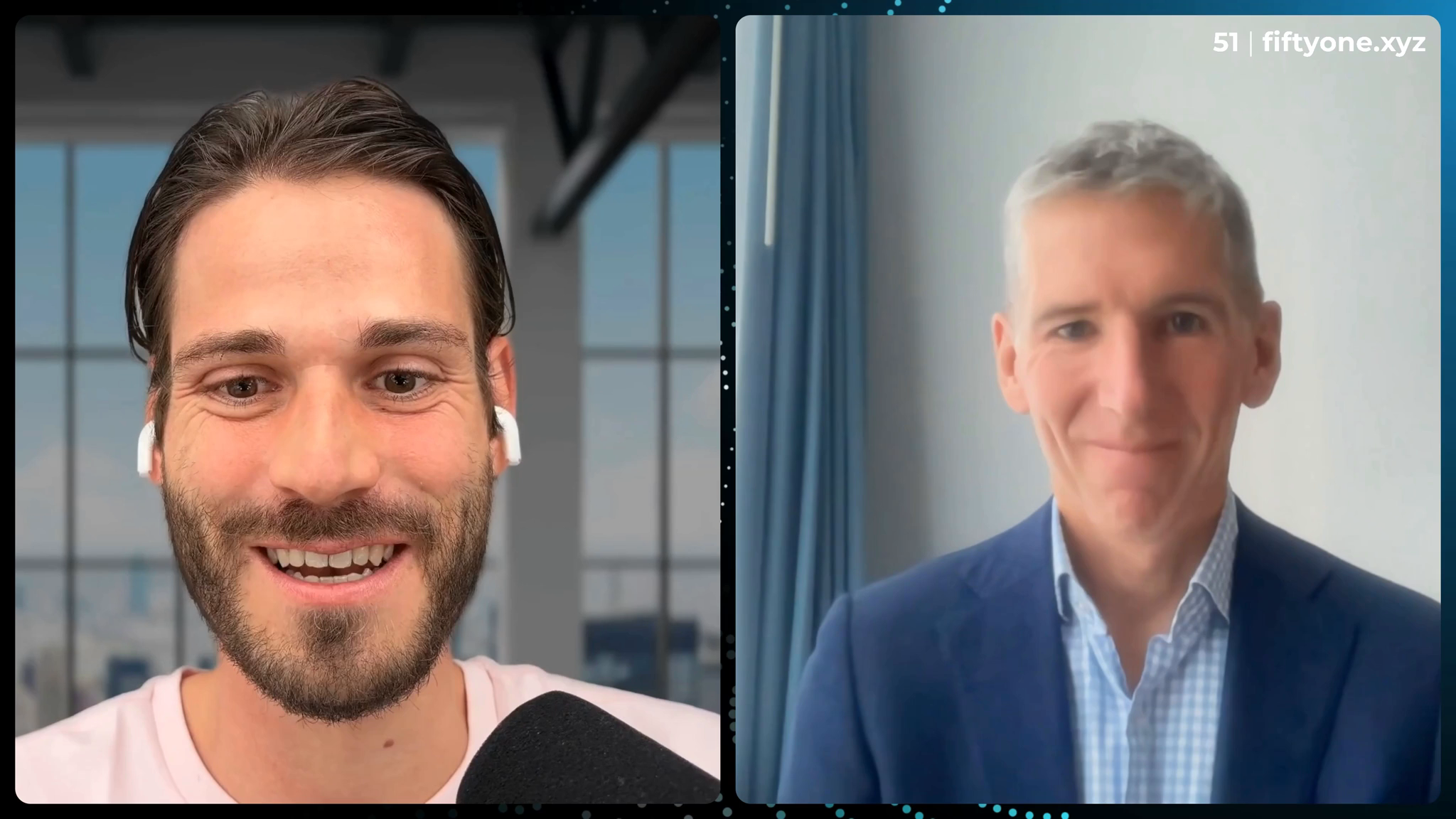
The crypto playbook for 2026, with Matt Hougan, CIO of Bitwise
Hi, it’s Marc. ✌️
“Zero is crazy because it means you’re just completely against the market... The starting point is about 2% of the size of the equity market and that should be the neutral starting point.”
That’s Matt Hougan, CIO of Bitwise Asset Management, on Bitcoin allocation. His point isn’t that one needs to be a crypto evangelist or a “laser-eyed” maximalist. It’s simply that in a world where Harvard is tripling its exposure and sovereign wealth funds are doubling down, having 0% exposure to digital assets is actually an active bet against the market.
In this episode, we sit down with Matt to make sense of the market’s recent swings.
Matt explains why the liquidity crunch and rate anxiety are temporary headwinds masking a massive structural shift: the transition from a programmed, halving-dependent cycle to a mature, macro-driven asset class.
We cover the “Bitcoin as a Service” valuation framework, why the old four-year cycle no longer explains the market, and why the smart money is quietly buying the haystack while retail tries to time the needle.
About Matt: Matt Hougan is the Chief Investment Officer at Bitwise Asset Management, the world’s largest crypto index fund manager. He was an early voice advocating for Bitcoin ETFs, and before joining Bitwise, he served as the CEO of ETF.com. A three-time member of the “Barron’s 100 Most Influential People in Fund Management,” Matt is the bridge between Wall Street rigor and the digital asset frontier, with presence on financial news channels like CNBC and Bloomberg.
🚨 We just opened new sponsorship slots for our podcast. Want to reach 35k+ digital asset leaders? Contact us here.
🎧 Jump to the best parts
- (00:37) → The Four Major Headwinds: Why the market is stalling right now (liquidity, election anxiety, and the ghosts of October 10th) and why 2026 is the real target
- (11:44) → Bitcoin is a SaaS Company: Matt’s brilliant framework for explaining Bitcoin’s value to traditional investors: It provides a service (wealth storage), but you buy the asset instead of paying a subscription.
- (22:14) → Is MicroStrategy A Ticking Time-Bomb?: Matt breaks down the math behind the “synthetic halving” and why corporate treasuries need to do more than just HODL.
- (26:30) → The “Do Hard Things” Thesis for DATs: Why ETFs have become the “risk-free rate” of crypto access, forcing companies like MicroStrategy and others to take on operational complexity to justify their premiums.
- (41:33) → Buy the Haystack: In a world of exploding stablecoins and L2s, picking winners is hard. Matt explains why a diversified approach, owning the equity, the infrastructure, and the tokens, is the only sane strategy.
- (46:36) → The Four 2026 Catalysts Bitwise Is Watching
Liquidity reversal (December 1st), Fed rate cuts, October 10th fears fading, and market structure progress. Matt’s specific roadmap for what needs to happen to hit new all-time highs—and why institutions are positioning now.
Important Links
- LinkedIn: https://www.linkedin.com/in/matthew-hougan/
- X: https://x.com/Matt_Hougan
- Bitwise memo: https://experts.bitwiseinvestments.com/cio-memos
- CFA Society NY: https://cfany.org/speaker-organizer/matt-hougan/
- Forbes: https://www.forbes.com/sites/matthougan/
🎙️ In our conversation, we discussed:
- Why the “Four Year Cycle” is fundamentally dead, even if it’s psychologically alive.
- The rise of the “DeFi Mullet”: TradFi in the front, DeFi in the back.
- Why stablecoins are the US dollar pair for the future of tokenised markets.
- The valuation math behind a $1.3M Bitcoin price target by 2035.
- Why Bitwise launched an XRP ETF and a staking-native Solana ETF.
Watch or listen now:
YouTube • Apple Podcasts
Recommended podcasts:
 Marc Baumann
 Marc Baumann
Recommended reports:
Marc Baumann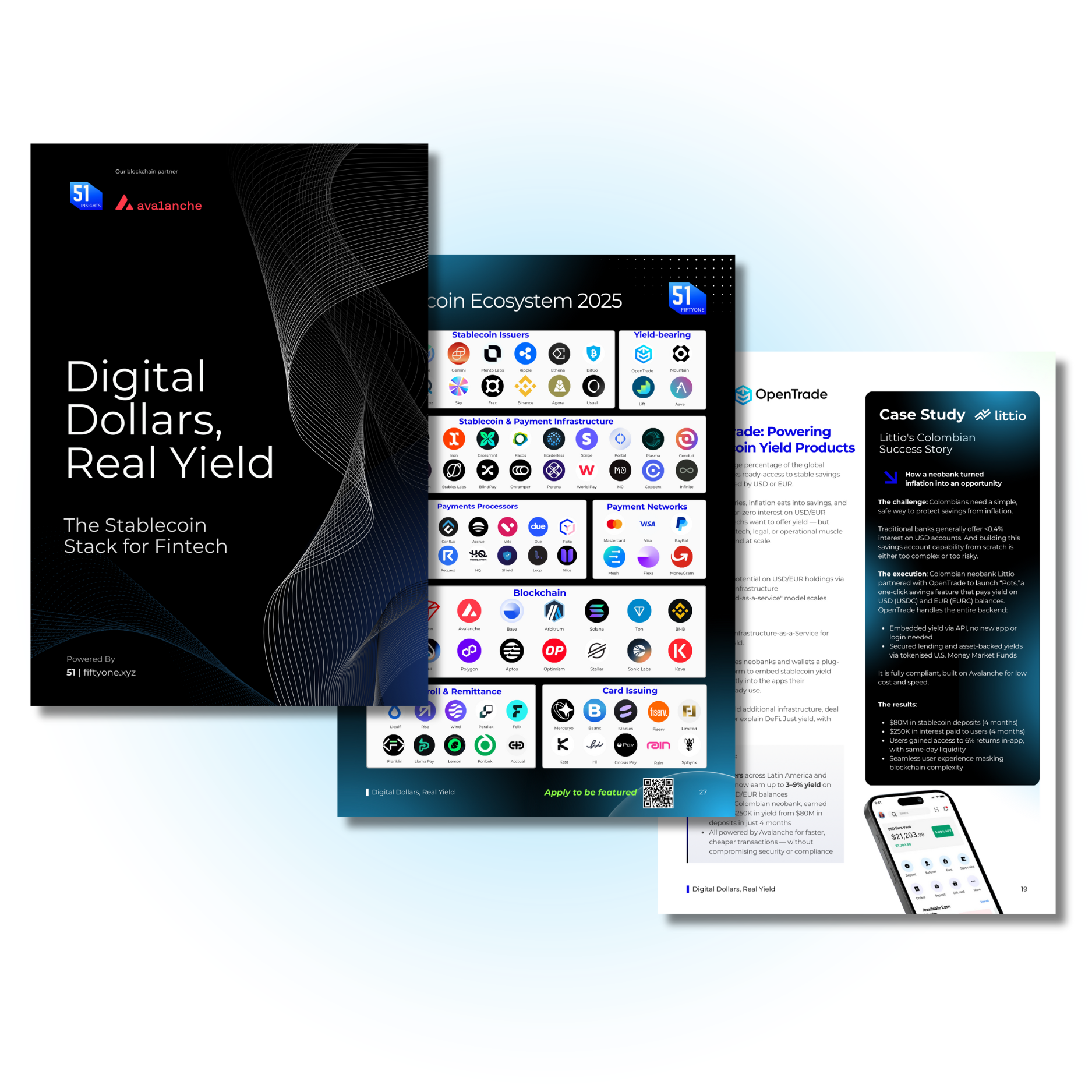
🙌 A note from 51: We arm financial institutions and digital asset leaders with bespoke research, thought leadership to shape the most important conversations, scale trust, and win business.

My biggest takeaways from this conversation:
1. Reframing the “Pet Rock” argument: Bitcoin as a Service
The biggest hurdle for institutional investors has always been: “It produces no cash flow. It’s a rock. Why is it worth $2 trillion?”
Hougan offers the cleanest mental model I’ve heard to counter this.
“Stop thinking of it as a commodity; think of it as a service provider.”
- The Service: The ability to store wealth in a digital format without a bank or government intermediary.
- The Value Capture: In a SaaS company (like Riverside or Zoom), you write a check to the company to get the service. Bitcoin isn’t a company, so there is no one to cash the check. To access the service, you must buy the asset.
Matt uses a total addressable market approach. Bitcoin is going after the store-of-value market (currently dominated by gold). That market is $27T. Bitcoin has 8% of it today. In 10 years, under Bitwise’s models, Bitcoin captures 25%, not because Bitcoin becomes bigger than gold, but because the overall market grows and Bitcoin wins share as institutions allocate.
Math it out: Gold market grows at 6-7% per year. Bitcoin takes 25% of that market in 10 years. Bitcoin lands at $1.3M.
If demand for the service (censorship-resistant storage) increases, the asset price must also rise. Simple supply and demand. With Harvard, Abu Dhabi, and Morgan Stanley now wanting the “service,” the valuation math changes drastically.
2. MicroStrategy’s moat has collapsed – and what comes next
For a long time, companies like MicroStrategy could trade at a massive premium simply by holding Bitcoin on their balance sheet. Why? Because it was hard for regular investors to buy Bitcoin.
That arbitrage is dead. Matt’s insight:
“To justify a premium valuation, Digital Asset Treasuries must ‘do hard things.’”
Now that spot ETFs exist (charging low fees for liquid access), a company can’t just be a Bitcoin wrapper. To justify a premium valuation, Digital Asset Treasuries (DATs) must “do hard things.”
The new standard: You can’t just hold. You have to generate yield, execute complex option overlays, or navigate intelligent leverage.
Bitwise just launched a Solana staking ETF that stakes 100% of assets, targeting 7% yields. If an ETF provides the asset plus the yield, a corporate treasury doing less than that is destroying value, not creating it.
3. The four-year cycle is dead
Crypto natives love their charts. They worship the “Halving”—the 4-year technical event where Bitcoin supply drops.
Hougan argues that fundamentally, the cycle is over.
- Diminishing Returns: The Halving impact is half as strong every four years. It’s now 1/8th as potent as it was in the beginning.
- The New Driver: Macroeconomics and institutional flows. The market is currently choppy not because of where we are in the halving cycle, but because liquidity was pulled from the system and the Fed is tight.
But more importantly: Interest rates are going down in 2026, not up like in 2018 and 2022. And institutional adoption is happening, not theory.
“In 2026, it’s going to be fairly common for them to own 1 to 5% crypto. It’s mostly going to be Bitcoin, but some may add ETH, Solana, or an index-based strategy.”
Matt’s prediction: Bitcoin hits $200,000 in 2026, not 2025. The timeline shifted, but the thesis strengthened. And 2026 will likely outperform 2025. Why? Regulatory clarity, liquidity returning, and the “bodies” of the 2022/2024 washouts are finally being cleared. We are moving from a programmed cycle to a mature, macro-driven asset class.
The opportunity is in owning the ecosystem
Matt doesn’t think you can predict which protocols will dominate.
“I hate to say it, but you have to buy it all.”
The old playbook was clear: Own Bitcoin. Own Ethereum. Hold them and win. The infrastructure was the game.
Now? The game is fragmenting. Stablecoins are exploding (and not appreciating to the protocol holder, they’re infrastructure). Applications are being built on top of protocols. Equities in crypto companies (Coinbase, Robinhood, Circle) are capturing value from user adoption, not just token ownership.
So what do you do?
You build a diversified crypto portfolio that owns:
- Infrastructure tokens: Bitcoin, ETH, Solana (the layer 1s that actually work)
- Application exposure: Aave (DeFi lending), Uniswap (DeFi trading), maybe others depending on thesis
- Enterprise/financial services: Coinbase (exchange network), Circle (stablecoin operations), Robinhood (ramp to retail)
- Stablecoin exposure: The protocols that win with stablecoins. Now, it is Ethereum (55% of stablecoin volume)
You won’t pick the right ones. You’ll own some zeros. But if you believe crypto is going to be 20x bigger in 10 years, and Matt does, you can afford to be wrong on individual bets as long as you’re right on the mega-trend.
“Accept the losers as part of having exposure to the winners and don’t try to find the needle in the haystack, just buy the haystack as the saying goes.”
Matt’s Bottom Line: The crypto market right now is like watching two time scales simultaneously. Retail is panicking about whether we’ve bottomed. Institutions are building infrastructure and slowly accumulating.
The story of 2025-2026 won’t be written by the traders who called the bottom in December. It will be written by the institutions that are quietly building exposure while everyone’s distracted.
Take care,
Marc
- Check out our AI newsletter, AI Operator, here.
- Check out our Crypto Treasury Alpha newsletter here.