
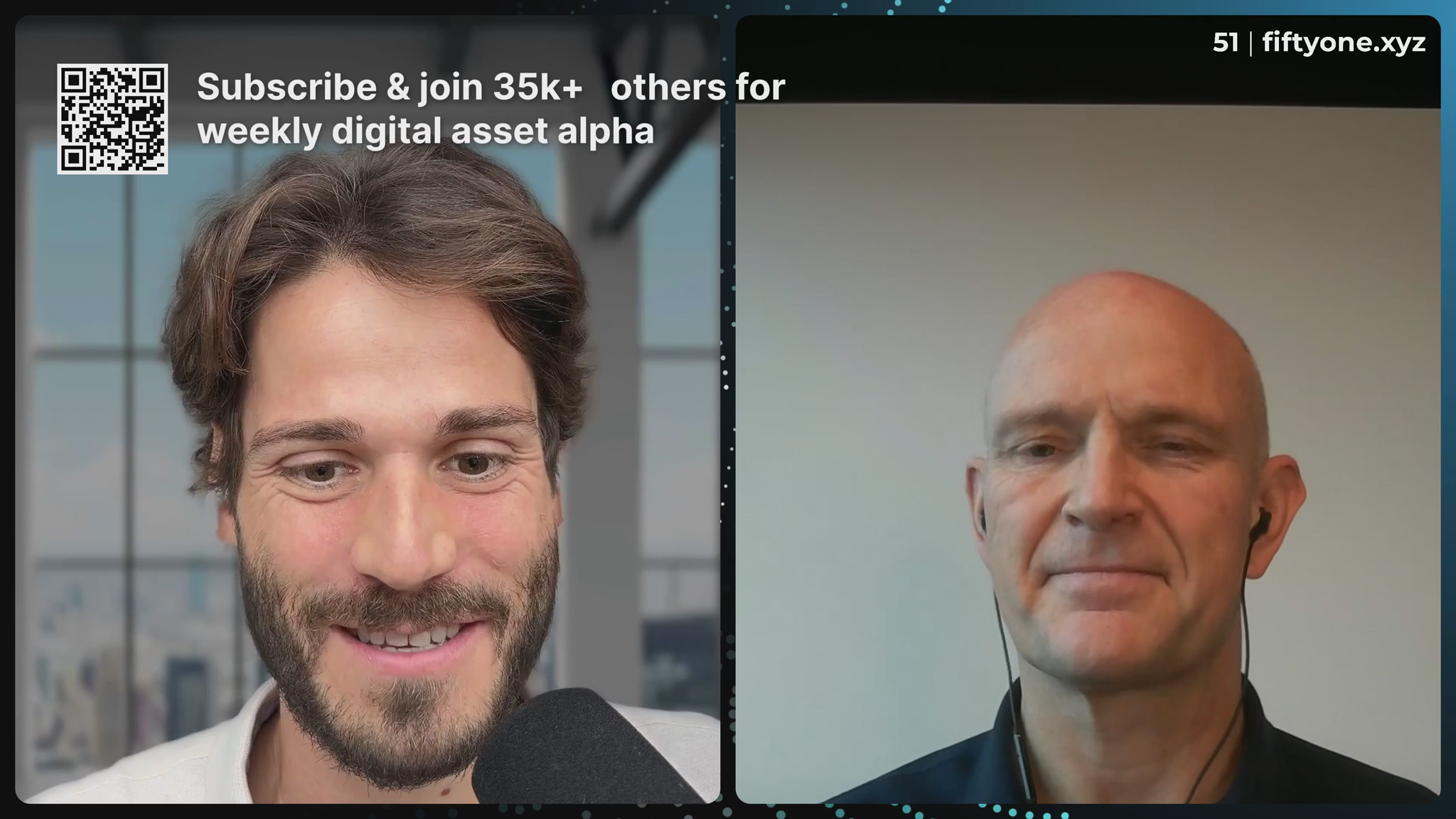
Europe’s €11 trillion stablecoin opportunity, with Sveinn Valfells, Co-Founder of Monerium
Hi, it’s Marc. ✌️
“Fiat needs to move 24/7. And that’s what blockchains are built for.”
That’s Sveinn Valfells, co-founder of Monerium, one of Europe’s oldest and largest stablecoin players – and one of the few people in Europe who’s not just talking about on-chain finance but actually building the regulatory-compliant rails to make it happen.
In this episode, we talk about how Sveinn helped write the stablecoin playbook that’s now shaping global policy. His company, Monerium, issued the first regulated stablecoin in Europe, long before Circle had a legal framework and before the U.S. even passed enabling legislation.
But this isn’t just another stablecoin episode.
It’s a front-row seat to the regulatory cold war unfolding between the U.S. and Europe and why Europe lost the first phase of this war.
About Sveinn: Sveinn Valfells is an Icelandic entrepreneur, scientist, and investor. With a background in tech and physics, Sveinn was an early adopter of Bitcoin, helping to organise the first Bitcoin conferences in London. He led Monerium in 2015 to become the first company licensed in the European Economic Area to issue e-money on-chain, including EURe, GBPe, and USDe stablecoins, enabling instant transfers between traditional bank accounts and blockchain wallets.
🚨 We just opened new sponsorship slots for our podcast. Want to reach 35k+ digital asset leaders? Contact us here.
🎧 Jump to the best parts
- (00:37) → The future of Fiat is on-chain: Sveinn explains his core thesis: blockchains offer a superior infrastructure for transacting real-world assets, and fiat currency is the most significant of these.
- (07:23) → The e-money blueprint: How Monerium issued the first regulated stablecoin in Europe using the pre-MiCA e-money framework — years before Circle or Paxos had legal clarity.
- (17:11) → MiCA vs. the Genius Act: Sveinn compares the EU’s MiCA regime with the U.S. Payment Stablecoin Act — and explains why America is now copying Europe’s early blueprint.¨
- (23:47) → The “too big to fail” risk of dollar dominance: Why relying on USD for 99% of stablecoin volume is dangerous — and how multi-currency rails could mitigate systemic risk.
- (29:00) → Why Europe fell behind and how they’ll catch up: Despite clear regulation, Europe’s fragmented startup ecosystem slowed real adoption. Sveinn outlines what needs to change for Europe to lead.
Important Links
- Website: https://sveinn.valfells.com/
- X: https://x.com/sveinn_valfells
- LinkedIn: https://www.linkedin.com/in/sveinn-valfells
- Medium: https://medium.com/@valfells
- Monerium: https://monerium.com/board/
🎙️ In our conversation, we discussed:
- Why the future of fiat currency is on the blockchain
- How Monarium pioneered regulated stablecoins in Europe
- The critical differences and similarities between EU and US stablecoin regulation
- The systemic risks of global reliance on the US dollar and its infrastructure
- Why the Euro has the potential to become a major on-chain currency
- The future of financial services in a tokenised world
- Why a multi-chain, multi-currency stablecoin ecosystem is inevitable
Watch or listen now:
YouTube • Spotify • Apple Podcasts
Recommended podcasts:
 Marc Baumann
 Marc Baumann
Recommended reports:
Marc Baumann Marc Baumann
🙌 A note from 51: We arm financial institutions and digital asset leaders with bespoke research, thought leadership to shape the most important conversations, scale trust, and win business.

My biggest takeaways from this conversation:
1. Regulation is the foundation for mainstream adoption
The stablecoin story is often told as “Move fast, break things” (Tether, Circle, Paxos in the US) vs. “Slow, cautious regulation” (Europe). But Valfells turns this narrative on its head.
Monarium’s strategy was counterintuitive: Wait. Do the homework. Get properly authorised under existing e-money frameworks (which have existed since 2000). Then issue.
The result? Monarium issued the first truly authorised stablecoin (Icelandic Króna ISK on Ethereum, July 2019) years before Circle and Paxos had a legal foundation, and nearly a half-decade before the US passed enabling legislation.
“We weren’t the first to market, but we were the first to be properly authorised in a major jurisdiction. And now what we see is the US is essentially copying our playbook with the Genius Act.”
For institutional adoption, this distinction matters more than anyone expected. Banks and enterprises weren’t waiting for renegade operators like Tether; they were waiting for someone regulators would smile at. Monarium provided that.
The meta-lesson: In fintech infrastructure, compliance is the moat.
2. The on-chain economy will be multi-currency
While the US dollar (~99%) overwhelmingly dominates the current stablecoin market, Sveinn argues this is a temporary state. The risks associated with a single dominant currency, coupled with the global nature of trade, necessitate a diverse ecosystem of on-chain fiat currencies. The rise of regulated frameworks for currencies like the Euro will be a catalyst for this shift.
“The world is now heavily reliant on the dollar, and the current administration is attacking the institutions that have protected the soundness of the dollar: the Fed’s independence, the budget deficit, the rule of law. We’re seeing unprecedented dollar risk unlike any time since the 1970s. The world needs to move toward a decentralized stablecoin ecosystem.”
Sveinn argues: If 99% of on-chain value is denominated in USD and USD faces policy risk, then crypto markets face systemic risk. Europe’s MiCA cap on non-EUR stablecoin usage isn’t protectionism, it’s prudent monetary autonomy.
The implication: Euro, GBP, JPY, and emerging market stablecoins will proliferate, not as speculative plays, but as part of global risk reduction. Monarium sees this as the biggest untapped market: 11 trillion euros in off-chain banking rails waiting to migrate to blockchain, currently capturing only a few hundred million on-chain.
“There will be a fat tail of stablecoins in many other currencies. That’s a huge opportunity.”
3. The end goal is a new financial stack
Sveinn emphasises that stablecoins are not the endgame but rather a fundamental building block for a more efficient financial system. The real value will be created by the services built on top of this on-chain fiat infrastructure, from automated lending platforms to instant, low-cost international trade settlement.
“Stablecoins themselves are not an end goal in any way at all, they are just a means to an end which is more efficient financial system.”
It’s not about issuing more EURC or more USDC. It’s about:
- Direct integration with banking infrastructure (Monerium integrated directly with SEPA, Europe’s main payment rail)
- Seamless on/off ramps (zero-cost entry and exit from blockchain rails)
- Cross-chain FX services (exchange EUR for USD for GBP natively on-chain)
- Enterprise applications (debit cards, supply chain, cross-border B2B)
This vision sees stablecoins fading into the background, becoming the invisible rails that power a new generation of financial applications that are faster, cheaper, and more accessible to everyone.
Companies like Ripple and Mastercard are building the financial stack for payments.
Marc Baumann Marc Baumann
Sveinn’s Bottom Line: Europe didn’t lose the stablecoin race because it lacked regulation; it lost because it moved too slowly. The U.S. built first. But Europe may build right. Now that the rails are finally live under MiCA, the next wave of digital money will look less like crypto speculation and more like regulated financial plumbing. When Europe moves, it moves with scale and discipline. The real opportunity isn’t in chasing the American lead, it’s in building the $11T infrastructure that follows.
Take care,
Marc
- Check out our AI newsletter, AI Operator, here.
- Check out our Crypto Treasury Alpha newsletter here.