
Circle’s Arc: Wall Street’s New Blockchain?
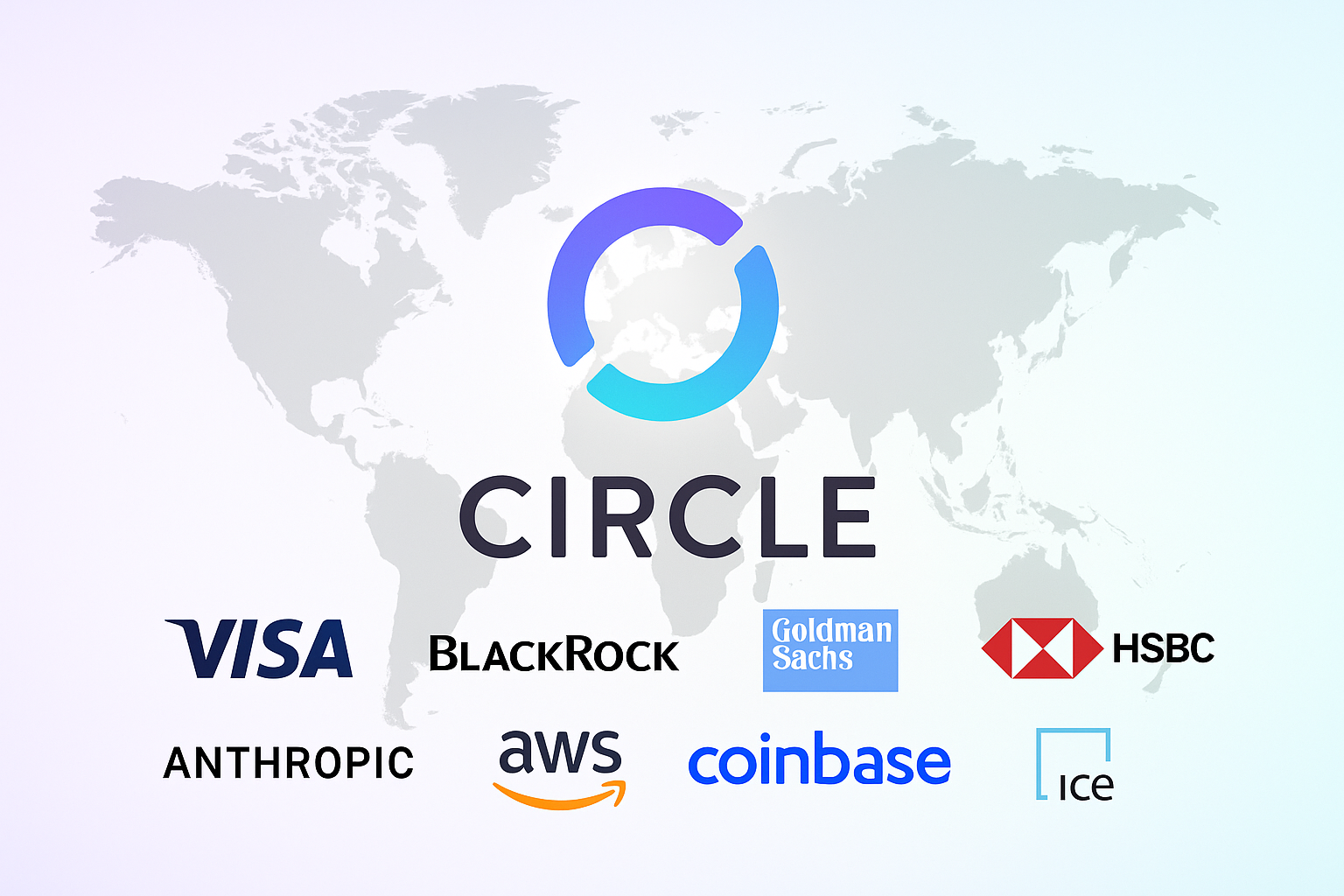
Circle launches its blockchain Arc with 100+ institutional partners, including Visa, BlackRock , ICE , Goldman Sachs, HSBC , State Street , AWS, Deutsche Bank , Coinbase , Kraken, Anthropic , and 90+ others. [RELEASE]
Circle’s fastest path to institutional adoption is vertical integration, building a trusted, compliant full-stack ecosystem for stablecoins and tokenised assets.
Will Circle succeed? And what does that mean for open-source layer 1s?
Let’s unpack.
PRO: Download the PDF
What Happened
Arc is a Layer-1 purpose-built blockchain, an “Economic Operating System” for the internet, engineered to bridge programmable money with the compliance demands of global finance. It's focus:
- Stablecoin payments
- FX settlement
- Capital markets transactions
What makes it different from other “corporate” chains?
- Arc uses USDC for gas fees, not a volatile token
- It’s public and EVM-compatible, not a walled garden. Ethereum tools work.
- privacy controls
- massive distribution from the beginning
- hyper-focused on stablecoins, payments & tokenization, the killer use cases of blockchain
Zooming in: Arc runs as an open, EVM-compatible Layer 1, powered by Malachite, a high-speed Byzantine Fault Tolerant engine based on Tendermint. This delivers deterministic finality: once a transaction clears, it’s final: no waiting, no reversals. It also blends privacy with compliance. Enterprises can choose privacy where needed, but with built-in audit access for regulators and KYC/AML checks.
Will Arc win?
Circle faces two massive challenges:
1) NEUTRAL RAILS
Big players want neutral rails. Centralized blockchains only work with massive distribution and industry coalitions (if ever). Because BlackRock won’t tokenize $10T on a chain run by one vendor. They’ll need credibly neutral rails.
→ Data can’t be altered.
→ Nobody can shut it off.
→ Code is the law.
Nevertheless, this is the most powerful attempt we saw in the last 10 years.
2) Competition
The financial stack is being rebuilt. Quietly. Globally. But this time, the prize isn’t the token. It’s who controls the new pipes, that makes the money. Stripe, JPM, Citi, Blackrock, SWIFT – all of them, and soon more, want to build the rails. Competition is increasing and it’s questionable whether anyone wants to use infrastructure that’s essentially “controlled” by or strongly associated with Circle. Circle isn’t neutral, it’s a competitor to many potential users of Arc.
Our take
Circle is positioning itself to become the “shared, neutral layer of economic infrastructure” with the ambition to provide the foundational protocol layer for global value transfer. It’s public and EVM-compatible, which won’t isolate Circle from the broader crypto community that helped USDC gain adoption.
The bigger challenge lies outside crypto. If banks succeed with private tokenised-deposit networks, Arc risks being walled off from core settlement flows. Circle must scale Arc into a neutral, interoperable layer connecting bank-issued assets with open markets. This will be hard, very hard.
More analysis from 51:
 Marc Baumann
 Marc Baumann
Today’s Market Signals
- Bitwise launches Solana ETF. Link
- Coinbase and Apollo partner to build credit products from stablecoins. Link
- IBM launches digital asset haven for financial institutions and enterprises. Link
- Canada advances stablecoin framework. Link
- Citi and Coinbase partner to streamline global digital asset payments. Link
Take care,
Marc
🙌 Work with us: We create pioneering thought leadership that helps digital asset and technology companies lead the conversation, earn trust and win business.
