

Circle vs. Hyperliquid
Circle isn’t taking chances.
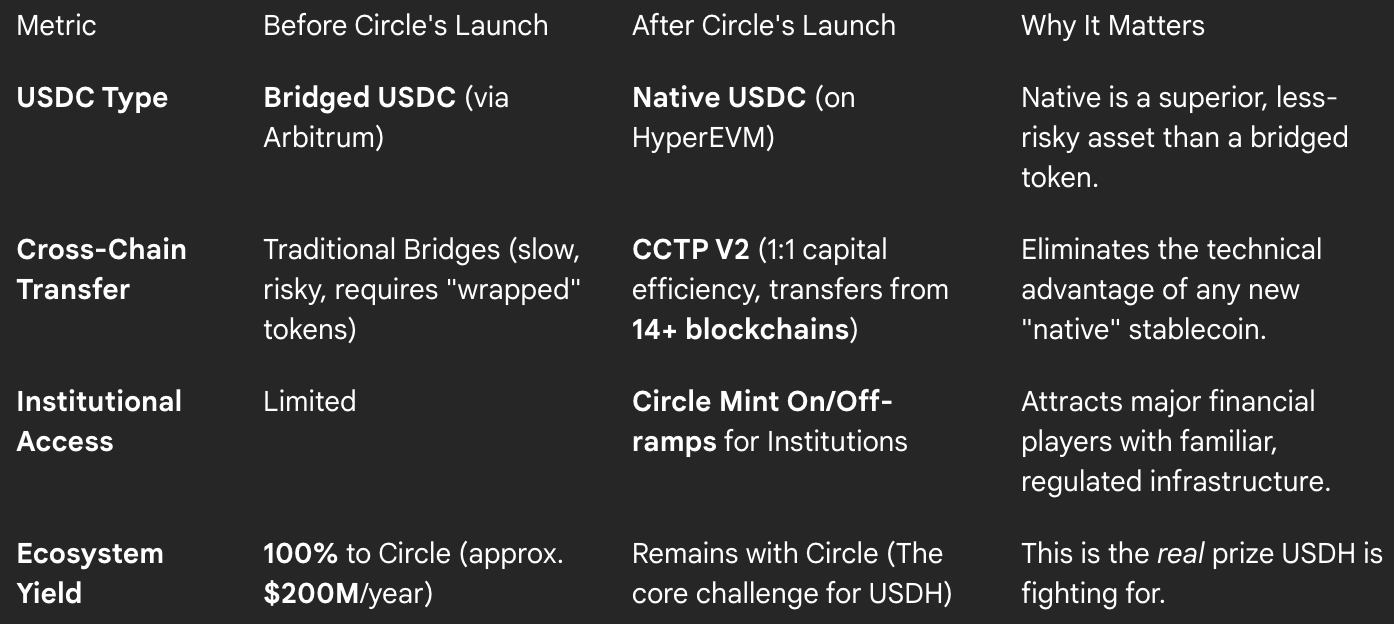
Days after Hyperliquid voted to launch USDH — a native stablecoin designed to funnel yield back into the protocol — Circle dropped its counterpunch: native USDC on Hyperliquid, complete with CCTP V2 for seamless cross-chain transfers across 14+ blockchains. [RELEASE]
For those catching up: last week, Hyperliquid voted for USDH, a “yield-sharing” stablecoin that could redirect ~$200M a year (10% of Circle’s revenue) from USDC reserves back to the ecosystem. Paxos, Agora, and others battled to be issuer. Native Markets won.
 Marc Baumann
Now Circle is making sure USDC stays sticky. Native issuance, fiat on/off ramps, institutional safeguards, all designed to erase USDH’s tech edge and force the fight to be about one thing only: economics.
This isn’t just Circle defending revenue. It’s the start of a bigger trend: chains demanding yield, issuers forced to share, and stablecoins becoming the battleground for who owns the payment rails.
Let’s unpack.
What’s happening
For the first time, Circle has directly embedded itself into the chain’s ecosystem. Developers, institutions, and traders can now access the world’s largest regulated stablecoin natively, with cross-chain deposits from 14+ blockchains. This comes with institutional perks like Circle Mint, fiat on/off ramps, and regulatory safeguards.
With billions of USDC already powering Hyperliquid ($5.5B balances, $200M+ annual yield to Circle), Circle wasn’t about to watch that moat erode.
Why it matters: This sets up a stablecoin showdown inside Hyperliquid.
- On one side: Circle, armed with regulation, liquidity, and institutional rails.
- On the other: USDH, a community-backed challenger offering yield-sharing and alignment. Native USDC plus CCTP V2 also erases many of USDH’s technical selling points (like “better cross-chain UX”), forcing challengers to compete purely on economics and ecosystem buy-in.
USDH Vote Outcome and Timeline: Native Markets won the USDH ticker on September 13-14, 2025, defeating heavyweight competitors including Paxos, Sky (formerly MakerDAO), Ethena, Frax Finance, Agora, and others. The victory came after Ethena withdrew from the race on Thursday, giving Native Markets over 99% odds on Polymarket.
Zooming in: Two USDCs now exist on Hyperliquid:
– HyperEVM USDC: native Circle-issued, with cross-chain support.
– HyperCore USDC: bridged from Arbitrum, still powering perps/spot markets.
Integration between the two is coming, which likely pulls liquidity toward the native version.
Day 1 partners included Wormhole, Across, Stargate, and Hyperliquid-native apps like HyperLend, a strong ecosystem signal.
Zooming out: Stablecoins have become the most valuable settlement layer in crypto. Whoever controls the flow of liquidity controls the economy. Hyperliquid is now ground zero for a larger battle between aligned, revenue-sharing stablecoins (USDH) and global incumbents (USDC). Expect similar fights on other DeFi-native chains as stablecoins morph from utility tokens into strategic power plays.
👉 interested in DATs? Sign up to our Crypto Treasury Alpha newsletters
Our Take
Circle’s play is classic defense: drop native USDC + CCTP right after the USDH vote to remind Hyperliquid that USDC’s moat isn’t just liquidity, it’s trust and institutional rails.
But this is bigger than Circle vs. USDH. Hyperliquid has become the test case for the “protocol state” — platforms using governance and market power to force issuers to share yield and align with the ecosystem.
The fight is simple:
- USDH → share the yield, keep value in the protocol
- USDC → stay safe, stay liquid, stay global
Whichever model wins here will set the template for stablecoins in a multi-chain, institution-driven future.
The bottom line: DeFi platforms, not issuers, are the new engines of value. Every major chain will demand its own native stablecoin or force incumbents to share economics.
Other signals of today:
- Moneygram launches stablecoin payments in Columbia. Link
- AI agents can use Circle wallets to unlock and pay for APIs. Link
- Amex now gives travellers digital passport stamps as NFTs. Link
- SBI and global banks test real-time cross-border tokenized settlements. Link
- Google, Coinbase, and Salesforce launch AI payments protocol with stablecoins. Link
- UBS and Swiss banks trial tokenised deposits on the Ethereum blockchain. Link
- London Stock Exchange launches blockchain platform for tokenized private funds. Link
- Apollo tokenizes credit strategy as Grove invests $50M in ACRDX. Link
That’s all for today’s CEO Note.
Best,
Marc & Team
🙌 Work with us: We create pioneering thought leadership that helps digital asset and technology companies lead the conversation, earn trust and win business.
