
The AWS moment of finance
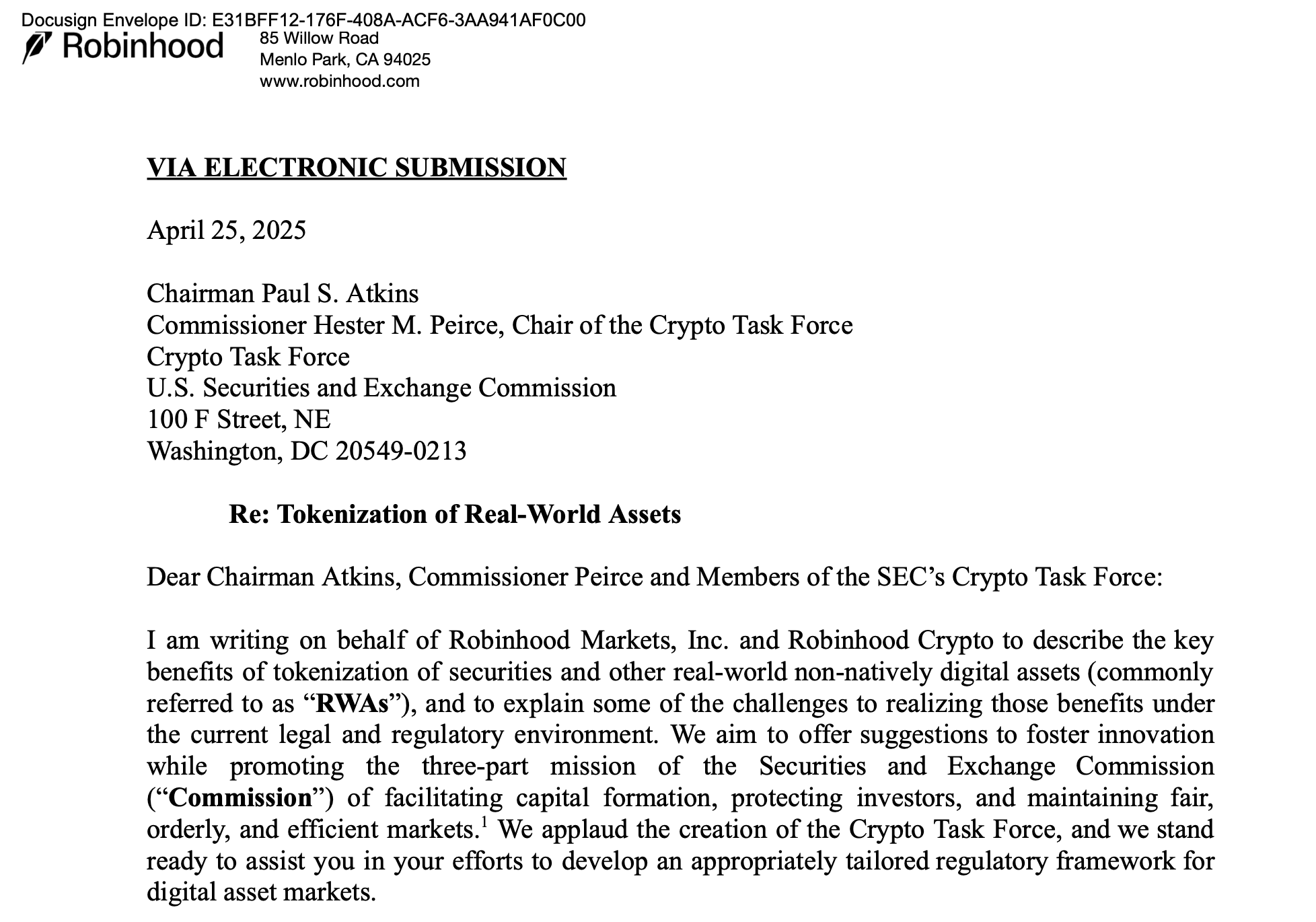
Robinhood just asked the SEC to let them put Wall Street onchain.
This isn't a crypto side hustle.
It's a regulated U.S. broker with 26 million users formally petitioning the Securities and Exchange Commission to greenlight the tokenization of real-world assets like stocks, treasuries, and funds.
Why it matters: We're witnessing the AWS moment for financial markets. Just as cloud computing transformed enterprise technology a decade ago, tokenization stands to remake the plumbing of global finance.
👉 Get your brand in front of 30,000+ decision-makers — book your ad spot now.
What Robinhood is asking for
- One federal framework: → Replace the state-by-state regulatory patchwork → Enable standardized compliance across jurisdictions → Remove the #1 barrier to institutional adoption
- Broker-dealer custody rights: → Allow regulated entities to custody and trade tokenized securities → Leverage existing compliance frameworks → Enable traditional firms to participate without parallel systems
- Token = asset equivalence: → Establish that a tokenized stock IS the stock—not a derivative → Ensure traditional investor protections apply → Enable regulatory clarity on ownership and rights
- 24/7 trading + instant settlement: → Markets that operate continuously like the internet → Eliminate multi-day settlement delays → Free up capital locked in settlement processes
What they're saying: "This legal equivalence is the cornerstone of mainstream adoption," noted BlackRock CEO Larry Fink in their Q1 earnings call. "Without it, we're building parallel systems rather than improving the existing one."
Market signals
In just a few years, traditional finance’s engagement with tokenization has evolved from small experiments to significant live deployments handling billions.
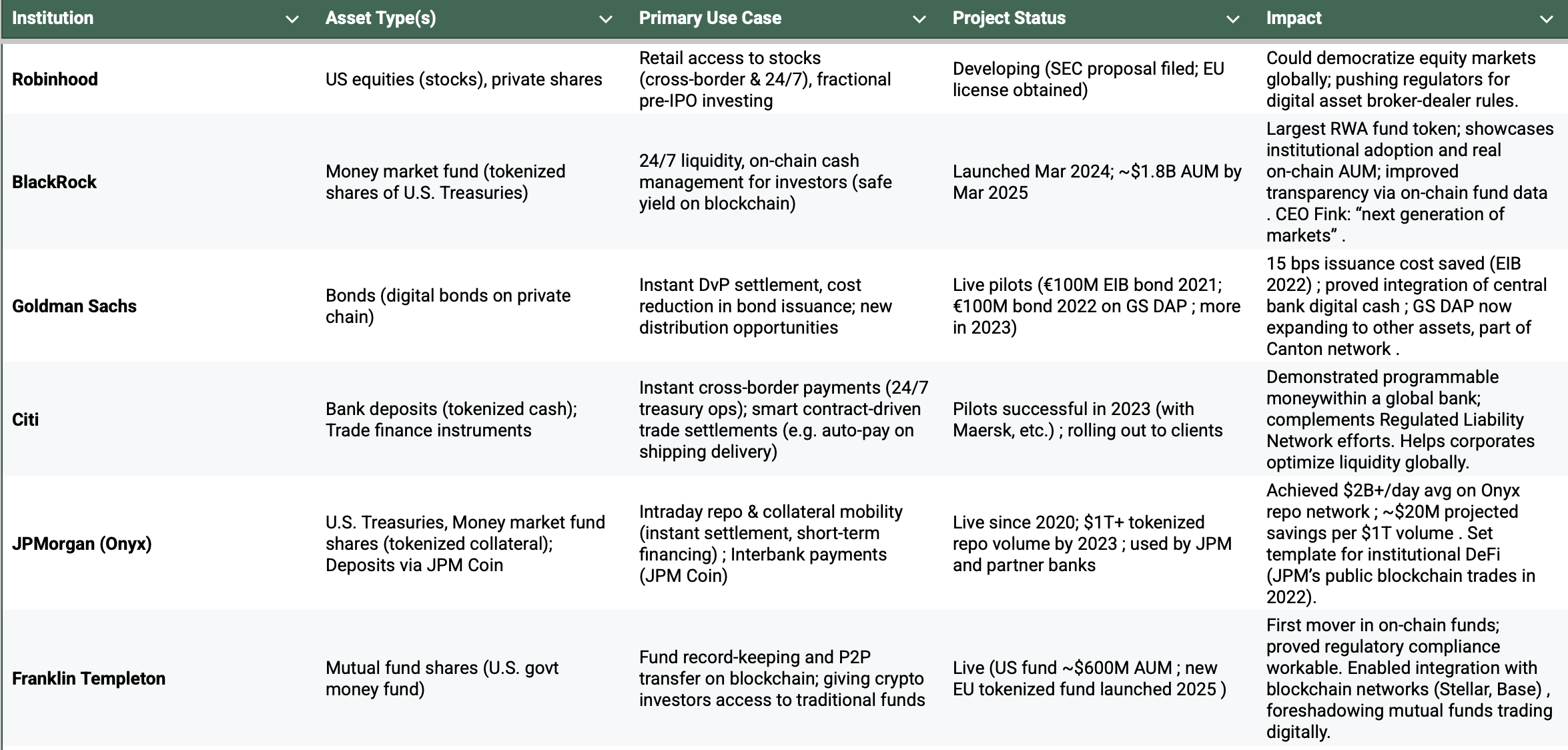
The initiatives described above collectively advance the tokenization ecosystem on all fronts – issuance, trading, settlement, custody, and data/analytics:
- Custody/Compliance: Banks like BNY Mellon offering custody and administrators like SG Forge obtaining licenses ensure that tokenized assets can be handled in a regulated, secure manner. This builds trust for more institutions to participate.
- Trading/Liquidity: Platforms and pilots by exchanges (SDX, LSE’s plans, etc.) and brokerages like Robinhood point toward actual marketplaces for tokenized assets. 24/7 trading and fractional access are being proven, which will attract new investor segments without compromising protections (e.g. whitelisted investors on JPM’s public DeFi trade ).
- Settlement/Infrastructure: Projects like DTCC Ion, JPM’s Onyx, and Goldman’s GS DAP attack the legacy inefficiencies (T+2 waits, multi-step DVP). They show that instant, atomic settlement is feasible at scale, which could eliminate settlement risk and crises like 2008’s, fundamentally strengthening market plumbing.
- Interoperability: Efforts by SWIFT, Canton Network, and others are making sure no token platform becomes an island. The ability for a token on one network to be used as collateral on another, or for fiat in a bank to settle a token trade in another country, is crucial. The collaboration of many big players in consortia indicates a recognition that standards and connectivity are needed for mainstream scaling.
- Market Confidence and Regulation: The open advocacy (e.g. Robinhood’s SEC letter, BlackRock’s public statements) and the involvement of respected institutions is influencing regulators. We see progress: Europe’s DLT Pilot Regime allowing market infra tests, SEC approving the first blockchain-traded funds, etc. Each successful pilot adds to evidence that investor protections can be maintained or even improved (through transparency and programmability) in a tokenized model.
What’s Next
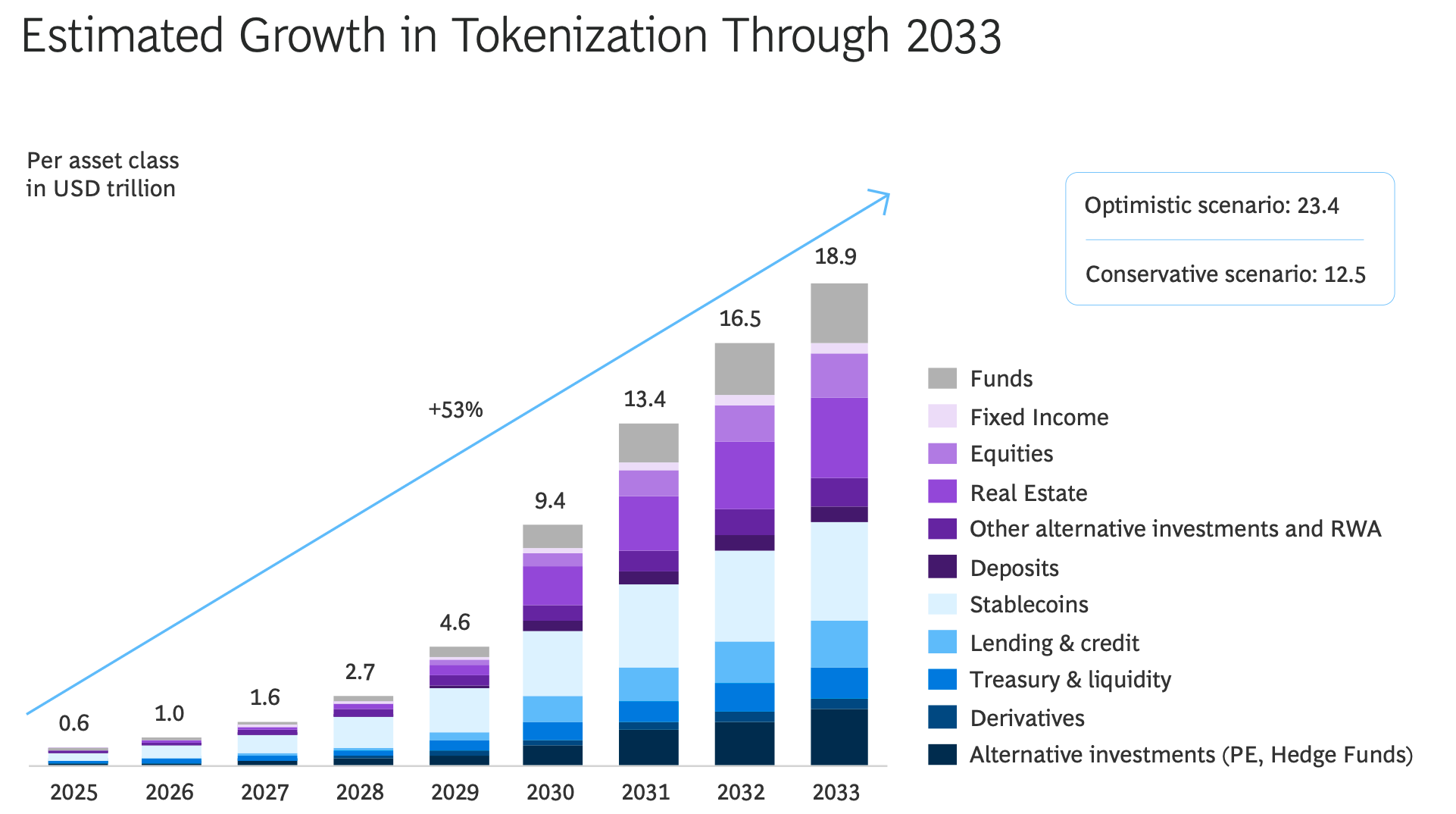
By 2025, we are much closer to mainstream adoption of tokenized real-world assets. Many of these projects have moved beyond concept: they are either in production or very close, with material benefits realized (cost savings, faster access to capital, increased liquidity).
The remaining hurdles include scaling up volumes, harmonizing regulations across jurisdictions, and educating market participants. But momentum is on the side of tokenization – as Larry Fink noted, the prospect of “every stock, every bond on the blockchain” now has the weight of trillion-dollar institutions behind it.
How it will likely play out:
1. More liquidity: we'll see highly liquid assets tokenized first (e.g. blue-chip stocks)
2. Change in market structure:
- 24/7 trading becomes standard for major asset classes
- Traditional exchange dominance challenged by new venues
- Automated compliance and programmable features become competitive advantages
So what?
Executives should think about this the same way they thought about going cloud-native 10 years ago:
Tokenization isn’t about crypto.
It’s about infrastructure.
And that infrastructure is finally asking permission to scale.
We’re now in the “AWS moment” of finance.
Talk soon,
Marc
We help companies like Avalanche, Near, or MoonPay with industry-leading thought leadership campaigns to attract institutional clients. Interested?